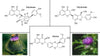
Milk thistle (Silybum marianum) is a plant with a long history of medicinal use, particularly for protecting the liver and supporting the body’s metabolic functions. Its primary active ingredient is silymarin, a mixture of flavonolignans that has beneficial effects on liver health, blood sugar regulation, and cardiovascular function. It also possesses anti-inflammatory, antioxidant, and antifibrotic properties, making it an important therapeutic agent in the treatment of various liver diseases.
Biochemical composition and mechanism of action

Milk thistle primarily contains silymarin, which consists of flavonolignans (silybin, silydianin, and silychristin), as well as other bioactive substances such as taxifolin, quercetin, kaempferol, and apigenin (Raclariu-Manolică and Socaciu, 2023). These substances have powerful antioxidant effects and protect liver cells against oxidative stress and toxins (Dhande et al., 2024). Silymarin supports the regeneration of hepatocytes, inhibits inflammatory processes, and increases the liver’s detoxification capacity by inhibiting lipid peroxidation (Surai et al., 2024). It also possesses antifibrotic properties, as it reduces collagen production in the liver and slows the progression of liver fibrosis (Jaffar et al., 2024). Research also indicates possible neuroprotective effects based on reducing neuroinflammation and supporting neuronal survival under conditions of oxidative stress (Yardım et al., 2021). Silymarin activates enzymes involved in the detoxification of xenobiotics, thereby supporting the elimination of heavy metals and other toxic substances (Bjørklund et al., 2024). In cases of toxic hepatitis caused by the death cap mushroom (Amanita phalloides), silymarin prevents toxins from entering hepatocytes and accelerates their regeneration (Tuğcan and Akpınar, 2025). Its potential use in treating liver complications associated with certain medications is also being investigated, for example during the long-term use of paracetamol or chemotherapeutic agents (Okiljević et al., 2024; Wang et al., 2023).
Effects on glucose metabolism and the cardiovascular system
Silymarin improves cellular sensitivity to insulin and helps regulate blood sugar levels. Studies have demonstrated its positive effects on glycemic parameters in patients with type 2 diabetes (Ferdowsi et al., 2024). It also supports cardiovascular health by reducing LDL cholesterol levels and protecting the vascular endothelium. Its mechanism of action is based on inhibiting oxidative stress and improving mitochondrial function in cardiac tissue (Ferdowsi et al., 2024; Zalat et al., 2021). Some studies suggest that silymarin may have a protective effect on cardiac tissue during ischemia and reperfusion injury. It also modulates the expression of genes associated with lipid metabolism, which may help reduce the risk of atherosclerosis (Kadoglou et al., 2022; Zalat et al., 2021).
Dosage and interactions with other substances
The recommended daily dose of milk thistle depends on the form of the preparation. The standard dosage of silymarin ranges from 100–360 mg of silibinin per individual dose, with a maximum daily dose of 420–600 mg (Foghis et al., 2023). Pharmacokinetic studies show that only 20–50% of silymarin is absorbed after oral administration, while up to 80% of the dose is excreted through the bile (Abenavoli and Milic, 2017; Javed et al., 2022). Modified nanoformulations, such as phosphatidylcholine or liposomal complexes, increase its bioavailability (Kesharwani et al., 2020). Milk thistle can be combined with other hepatoprotective substances, such as curcumin or N-acetylcysteine, to produce a synergistic effect (Chaachouay, 2025). Although silymarin is generally considered safe, it may interact with certain medications, such as warfarin, statins, and some cytostatic drugs, because it affects the activity of cytochrome P450 enzymes (Likhodii et al., 2024). The most common side effects are mild gastrointestinal complaints, such as bloating or diarrhea (Akhtar et al., 2023).
Possible alternatives and related preparations
Some other plant extracts have effects similar to those of milk thistle, including Chinese magnolia vine (Schisandra chinensis) and artichoke extract (Cynara scolymus), both of which support detoxification and liver health (Pereira, 2016). Chinese magnolia vine contains lignans with protective effects on liver cells (Skalski et al., 2025), while artichoke stimulates bile production and supports digestive processes (Moradi et al., 2021). The combination of silymarin and resveratrol is also important, as resveratrol enhances its antioxidant and anti-inflammatory effects (Farzanegan et al., 2019). Synergistic combinations of these substances may improve the effectiveness of treatments for liver diseases and metabolic disorders (Pereira, 2016).
Future prospects for the use of milk thistle
In recent years, the use of silymarin in the treatment of neurodegenerative diseases such as Alzheimer’s disease and Parkinson’s disease has been investigated because of its ability to inhibit neuroinflammation and oxidative stress in brain tissue (Ashique et al., 2024). Its potential in oncology is also being studied, as it exhibits antiproliferative effects against certain types of cancer cells. Experimental studies show that silymarin may influence tumor cell apoptosis by modulating signaling pathways associated with cell survival (Emadi et al., 2022; Wang et al., 2023). Another area of research is the use of silymarin nanoformulations to improve its bioavailability and therapeutic efficacy (Kesharwani et al., 2020). Research also focuses on its immunomodulatory effects and its potential in the treatment of autoimmune diseases (Esmaeil et al., 2017; Surai et al., 2024).
Conclusion
Milk thistle is a powerful natural antioxidant with a broad range of effects on human health. It protects the liver, supports blood sugar regulation, benefits heart health, and also shows potential in the treatment of neurodegenerative diseases and cancer. Further clinical studies are needed to better understand its effects and optimize its dosage for different health indications.
Written for Kratom World by:
Ing. Matěj Malík, Ph.D.
Researcher, postdoctoral fellow
Faculty of Agrobiology, Food and Natural Resources, Czech University of Life Sciences Prague (ČZU)
Department of Agroenvironmental Chemistry and Plant Nutrition
Thank you for reading,
Your Kratom World
This article is not intended as instructions for use or as a recommendation for consumption. The information provided is for educational and informational purposes only. The products mentioned in this article are intended exclusively for collection and study purposes.
Sources:
- Abenavoli, L., Milic, N., 2017. Chapter 45 - Silymarin for Liver Disease, In: Muriel, P. (Ed.), Liver Pathophysiology. Academic Press, Boston, pp. 621-631. https://doi.org/10.1016/B978-0-12-804274-8.00045-X.
- Akhtar, M.N., Saeed, R., Saeed, F., Asghar, A., Ghani, S., Ateeq, H., Ahmed, A., Rasheed, A., Afzaal, M., Waheed, M., Hussain, B., Asif Shah, M., 2023. Silymarin: a review on paving the way towards promising pharmacological agent. International Journal of Food Properties. 26, 2256-2272. https://doi.org/10.1080/10942912.2023.2244685.
- Ashique, S., Mohanto, S., Kumar, N., Nag, S., Mishra, A., Biswas, A., Rihan, M., Srivastava, S., Bhowmick, M., Taghizadeh-Hesary, F., 2024. Unlocking the possibilities of therapeutic potential of silymarin and silibinin against neurodegenerative Diseases-A mechanistic overview. European Journal of Pharmacology. 981, 176906. https://doi.org/10.1016/j.ejphar.2024.176906.
- Bjørklund, G., Cruz-Martins, N., Goh, B.H., Mykhailenko, O., Lysiuk, R., Shanaida, M., Lenchyk, L., Upyr, T., Rusu, M.E., Pryshlyak, A., Shanaida, V., Chirumbolo, S., 2024. Medicinal Plant-derived Phytochemicals in Detoxification. Current Pharmaceutical Design. 30, 988-1015. https://doi.org/10.2174/1381612829666230809094242.
- Dhande, D., Dhok, A., Anjankar, A., Nagpure, S., 2024. Silymarin as an Antioxidant Therapy in Chronic Liver Diseases: A Comprehensive Review. Cureus. 16, e67083. https://doi.org/10.7759/cureus.67083.
- Emadi, E., Ghasemzadeh Rahbardar, M., Mehri, S., Hosseinzadeh, H., 2022. A review of therapeutic potentials of milk thistle (Silybum marianum L.) and its main constituent, silymarin, on cancer, and their related patents. Iranian Journal of Basic Medical Sciences. 25, 1166-1176. https://doi.org/10.22038/ijbms.2022.63200.13961.
- Esmaeil, N., Anaraki, S.B., Gharagozloo, M., Moayedi, B., 2017. Silymarin impacts on immune system as an immunomodulator: One key for many locks. International Immunopharmacology. 50, 194-201. https://doi.org/10.1016/j.intimp.2017.06.030.
- Farzanegan, A., Shokuhian, M., Jafari, S., Shirazi, F.S., Shahidi, M., 2019. Anti-histaminic Effects of Resveratrol and Silymarin on Human Gingival Fibroblasts. Inflammation. 42, 1622-1629. https://doi.org/10.1007/s10753-019-01023-z.
- Ferdowsi, S., Shidfar, F., Heidari, I., Kashi, M., Sohouli, M.H., Sarrafi Zadeh, S., 2024. Effect of silymarin on lipid profile and glycemic control in patients with type 2 diabetes mellitus. Phytotherapy Research. 38, 4667-4674. https://doi.org/10.1002/ptr.8273.
- Foghis, M., Bungau, S.G., Bungau, A.F., Vesa, C.M., Purza, A.L., Tarce, A.G., Tit, D.M., Pallag, A., Behl, T., ul Hassan, S.S., Radu, A.-F., 2023. Plants-based medicine implication in the evolution of chronic liver diseases. Biomedicine & Pharmacotherapy. 158, 114207. https://doi.org/10.1016/j.biopha.2022.114207.
- Chaachouay, N., 2025. Synergy, Additive Effects, and Antagonism of Drugs with Plant Bioactive Compounds. Drugs and Drug Candidates. 4, 4. https://doi.org/10.3390/ddc4010004.
- Jaffar, H.M., Al-Asmari, F., Khan, F.A., Rahim, M.A., Zongo, E., 2024. Silymarin: Unveiling its pharmacological spectrum and therapeutic potential in liver diseases—A comprehensive narrative review. Food Science & Nutrition. 12, 3097-3111. https://doi.org/10.1002/fsn3.4010.
- Javed, S., Kohli, K., Ahsan, W., 2022. Bioavailability augmentation of silymarin using natural bioenhancers: An in vivo pharmacokinetic study. Brazilian Journal of Pharmaceutical Sciences. 58, e20160. https://doi.org/10.1590/s2175-97902022e20160.
- Kadoglou, N.P.E., Panayiotou, C., Vardas, M., Balaskas, N., Kostomitsopoulos, N.G., Tsaroucha, A.K., Valsami, G., 2022. A Comprehensive Review of the Cardiovascular Protective Properties of Silibinin/Silymarin: A New Kid on the Block. Pharmaceuticals. 15, 538. https://doi.org/10.3390/ph15050538.
- Kesharwani, S.S., Jain, V., Dey, S., Sharma, S., Mallya, P., Kumar, V.A., 2020. An overview of advanced formulation and nanotechnology-based approaches for solubility and bioavailability enhancement of silymarin. Journal of Drug Delivery Science and Technology. 60, 102021. https://doi.org/10.1016/j.jddst.2020.102021.
- Likhodii, S., Chin, A.C., Baskin, L.B., 2024. Chapter 22 - Role of therapeutic drug monitoring to identify clinically significant drug–herbal supplement interaction, In: Dasgupta, A. (Ed.), Therapeutic Drug Monitoring (Second Edition). Academic Press, pp. 515-544. https://doi.org/10.1016/B978-0-443-18649-3.00015-X.
- Moradi, S., Shokri-Mashhadi, N., Saraf-Bank, S., Mohammadi, H., Zobeiri, M., Clark, C.C.T., Rouhani, M.H., 2021. The effects of Cynara scolymus L. supplementation on liver enzymes: A systematic review and meta-analysis. International Journal of Clinical Practice. 75, e14726. https://doi.org/10.1111/ijcp.14726.
- Okiljević, B., Martić, N., Govedarica, S., Andrejić Višnjić, B., Bosanac, M., Baljak, J., Pavlić, B., Milanović, I., Rašković, A., 2024. Cardioprotective and Hepatoprotective Potential of Silymarin in Paracetamol-Induced Oxidative Stress. Pharmaceutics. 16, 520. https://doi.org/10.3390/pharmaceutics16040520.
- Pereira, C.S.C., 2016. Providing scientific evidence for the use of dietary supplements: a case study in hepatoprotective plants, Departamento de Química Analítica, Nutrición y Bromatología. Universidad de Salamanca, Salamanca, pp. 1-204. https://doi.org/10.14201/gredos.129635.
- Raclariu-Manolică, A.C., Socaciu, C., 2023. Detecting and Profiling of Milk Thistle Metabolites in Food Supplements: A Safety-Oriented Approach by Advanced Analytics. Metabolites. 13, 440. https://doi.org/10.3390/metabo13030440.
- Skalski, B., Kuźniak, E., Kowalska, I., Sikora, M., Olas, B., 2025. A Review of the Biological Activity and Structure–Property Relationships of the Main Compounds from Schisandra chinensis. Nutrients. 17, 436. https://doi.org/10.3390/nu17030436.
- Surai, P.F., Surai, A., Earle-Payne, K., 2024. Silymarin and Inflammation: Food for Thoughts. Antioxidants. 13, 98. https://doi.org/10.3390/antiox13010098.
- Tuğcan, M.O., Akpınar, A.A., 2025. Mushroom poisoning: An updated review. Turkish Journal of Emergency Medicine. 25, 10-16. https://doi.org/10.4103/tjem.tjem_129_24.
- Wang, Y., Yuan, A.-J., Wu, Y.-J., Wu, L.-M., Zhang, L., 2023. Silymarin in cancer therapy: Mechanisms of action, protective roles in chemotherapy-induced toxicity, and nanoformulations. Journal of Functional Foods. 100, 105384. https://doi.org/10.1016/j.jff.2022.105384.
- Yardım, A., Kucukler, S., Özdemir, S., Çomaklı, S., Caglayan, C., Kandemir, F.M., Çelik, H., 2021. Silymarin alleviates docetaxel-induced central and peripheral neurotoxicity by reducing oxidative stress, inflammation and apoptosis in rats. Gene. 769, 145239. https://doi.org/10.1016/j.gene.2020.145239.
- Zalat, Z., Kohaf, N., Alm El-Din, M., Elewa, H., Abdel-Latif, M.M.M., 2021. Silymarin: A promising cardioprotective agent. Azhar International Journal of Pharmaceutical and Medical Sciences. 1, 13-21. https://doi.org/10.21608/aijpms.2021.52962.1014.


