Your Cart is Empty
Shipping is free on orders over €60!
Shipping is free on orders over €60!

Creatine is a nitrogen-containing organic compound of a guanidine nature that occurs naturally in vertebrates and plays a key role in cellular energy metabolism, particularly in tissues with high and fluctuating energy demands such as skeletal muscle and the brain (Wyss and Kaddurah-Daouk, 2000; Wallimann et al., 2011). It was discovered in 1832 by the French chemist Michel Eugène Chevreul, who isolated it from an aqueous extract of skeletal muscle and named it after the Greek word kreas (meat). A few years later, Justus von Liebig confirmed creatine as a common component of vertebrate muscle and chemically identified it as methylguanidinoacetic acid (Wyss and Kaddurah-Daouk, 2000; Bredahl et al., 2021). The human body obtains creatine in two ways, namely through endogenous synthesis and through the diet, with approximately half of the daily requirement in people consuming a mixed diet being covered by endogenous synthesis and the other half by dietary intake (Brosnan and Brosnan, 2007). Biosynthesis takes place through a two-step enzymatic process from three amino acids: arginine, glycine and methionine. In the first step, the enzyme L-arginine:glycine amidinotransferase (AGAT) catalyzes the transfer of an amidino group from arginine to glycine to form guanidinoacetic acid. This step is rate-limiting and regulatory for the entire pathway. In the second step, the enzyme guanidinoacetate-N-methyltransferase (GAMT) methylates guanidinoacetic acid using S-adenosylmethionine as the methyl-group donor, thereby forming creatine (Wyss and Kaddurah-Daouk, 2000). This synthesis takes place mainly in the liver, kidneys and pancreas, from where creatine is distributed through the bloodstream to target tissues (Persky and Brazeau, 2001; Bredahl et al., 2021). Baseline creatine stores are not the same in all individuals. Lower muscle concentrations are more commonly observed in vegetarians and vegans, who do not obtain creatine from meat and fish, and it is precisely in these individuals that the absolute increase after supplementation tends to be greater (Burke et al., 2003; Kaviani et al., 2020). This does not mean, however, that people consuming a mixed diet do not respond to creatine. The difference mainly concerns the magnitude of the achievable increase in stores rather than the fundamental mechanism of action. Direct measurements have confirmed that vegetarians have resting muscle concentrations of creatine and phosphocreatine approximately 20 to 30% lower than omnivores (Kreider et al., 2017; Kaviani et al., 2020), and women also have lower endogenous stores than men (Smith-Ryan et al., 2021). Variability in response is further influenced by the amount of muscle mass, the proportion of fast-twitch muscle fibers, training status and probably also the activity of the SLC6A8 transporter (Wyss and Kaddurah-Daouk, 2000; Syrotuik and Bell, 2004; Kreider et al., 2017). The main natural dietary sources are meat and fish. For illustration, one five-gram dose of creatine corresponds to the creatine content of approximately 1.1 kg of raw beef, since beef contains about 4.5 g of creatine per kilogram, while some fish, such as herring, contain as much as 6.5 to 10 g of creatine per kilogram of raw fish (Brosnan and Brosnan, 2007; Kreider et al., 2017). The body of an adult weighing around 70 kg contains a total creatine pool of approximately 120 to 140 g, with about 95% located in skeletal muscle and the remainder mainly in the brain, heart and other tissues. Daily turnover is approximately 1 to 2 g, as creatine and phosphocreatine spontaneously and nonenzymatically convert to creatinine, which is excreted in the urine. This loss must be continuously replaced by dietary intake or endogenous synthesis (Wyss and Kaddurah-Daouk, 2000; Kreider et al., 2017). As a sports supplement, creatine entered wider public awareness in the early 1990s, largely thanks to the landmark work of Harris and colleagues. They demonstrated that oral supplementation in the form of creatine monohydrate markedly increases total creatine content in skeletal muscle, with increases of up to around 50% in individuals with the lowest baseline levels, and that part of the ingested creatine is stored as phosphocreatine (Harris et al., 1992). Commercial expansion followed after the 1992 Summer Olympic Games in Barcelona (Bredahl et al., 2021). Since then, creatine monohydrate has become the most extensively studied and most widely used ergogenic dietary supplement and is described in the position stand of the International Society of Sports Nutrition as the most effective nutritional supplement available to athletes for increasing high-intensity exercise capacity and lean body mass during training (Buford et al., 2007; Kreider et al., 2017). In recent years, interest has also grown in its use outside sport, for example in relation to cognitive function, recovery or the health of an aging population, although the strongest evidence still remains in the areas of muscle metabolism and physical performance (Avgerinos et al., 2018; Kreider and Stout, 2021; Roschel et al., 2021). Current literature therefore no longer classifies creatine solely as a sports supplement. It is being investigated as nutritional support in aging, sarcopenia, recovery, prolonged immobilization and situations of increased brain energy demand (Kreider and Stout, 2021; Roschel et al., 2021). The indispensable physiological role of creatine, especially in the central nervous system, is demonstrated by congenital disorders of its metabolism, collectively referred to as cerebral creatine deficiency syndromes. Two synthesis disorders are distinguished, namely deficiency of the AGAT enzyme and deficiency of the GAMT enzyme, along with one transport disorder caused by mutations in the SLC6A8 gene. These lead to an almost complete absence of creatine in the brain, measurable by magnetic resonance spectroscopy, and manifest as delayed psychomotor development, intellectual disability, speech disorders, epilepsy and autistic features. In synthesis disorders, high-dose creatine administration can partially restore brain creatine stores, whereas treatment of the transporter disorder is only of limited effectiveness because the transporter itself is absent at the blood-brain barrier (Braissant and Henry, 2008; Kreider and Stout, 2021).
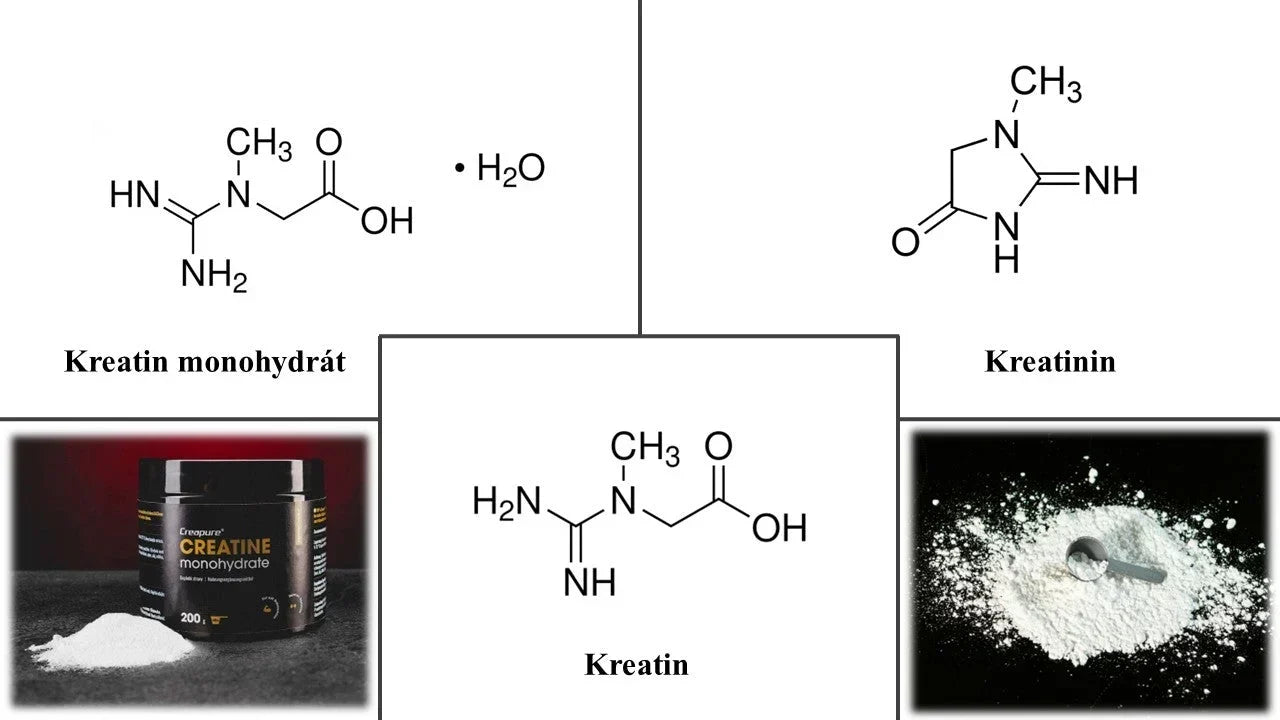
Chemically, creatine is (α-methylguanidino)acetic acid, systematically N-(aminoiminomethyl)-N-methylglycine, with the empirical formula C4H9N3O2 and a molar mass of 131.13 g/mol (Fig. 1). In dietary supplements, it most commonly occurs in the monohydrate form, in which one molecule of crystal water is bound to the creatine molecule. The molecular formula of the monohydrate is therefore C4H9N3O2·H2O and the molar mass is approximately 149.15 g/mol (Fig. 1). Creatine monohydrate therefore contains approximately 87.9% creatine by weight, with the remainder consisting of bound water. It is a white, odorless crystalline powder forming monoclinic crystals (Dash et al., 2002; Bonilla et al., 2021; Kreider et al., 2022). The crystal structure and physicochemical properties of creatine monohydrate have been characterized in detail by X-ray diffraction and thermal analysis. It is important to distinguish creatine from creatinine. Creatinine is the cyclic anhydride of creatine, formed by spontaneous, nonenzymatic intramolecular cyclization with the loss of a water molecule, and represents the final degradation product excreted by the kidneys. This conversion is accelerated by lower pH and higher temperature (Dash et al., 2002; Jäger et al., 2011; Bonilla et al., 2021). In the solid state, creatine monohydrate is highly stable and shows no signs of degradation even after more than three years of storage at room temperature, with creatinine formation remaining below the limit of quantification (Jäger et al., 2011; Kreider et al., 2022). In aqueous solution, by contrast, it is not stable and gradually converts to creatinine, which is why it is recommended to prepare a drink shortly before consumption. In practical terms, it is important to distinguish the stability of the dry raw material from the stability of the prepared beverage (Ganguly et al., 2003; Jäger et al., 2011; Kreider et al., 2022). Experimental studies confirm the high stability of dry crystalline creatine and its gradual degradation in solution, which can be slowed by refrigeration. The conversion of creatine to creatinine follows first-order kinetics, with the rate increasing as temperature rises and, within the usual pH range of beverages, also as pH falls below the neutral range. The conversion is therefore slower in neutral or mildly alkaline conditions, whereas mildly acidic pH, heat and prolonged storage of the solution accelerate it. Dissolving creatine in juice or a warm beverage therefore does not in itself pose a problem provided that the mixture is consumed shortly after preparation. By contrast, long-term storage, especially for several days, of a pre-prepared acidic solution is inappropriate (Ganguly et al., 2003; Jäger et al., 2011; Antonio et al., 2021; Kreider et al., 2022). At neutral pH, creatine is relatively stable during the first several hours, whereas storage in a more acidic environment for several days significantly increases its degradation. The phosphorylated form of creatine, phosphocreatine or creatine phosphate, is a high-energy compound that serves as a rapidly available reserve of phosphate groups for the resynthesis of adenosine triphosphate (Wallimann et al., 2011; Bonilla et al., 2021). The solubility of creatine monohydrate in water is limited and is approximately 13 g/l at 25 °C, increasing as the temperature rises. A standard 5 g dose therefore does not dissolve completely in 200 to 300 ml of liquid. So-called micronization, meaning a reduction in powder particle size, increases the rate of dissolution and improves dispersibility and wettability in liquid, without itself changing the molecule’s equilibrium or thermodynamic solubility (Albagachiev et al., 2026). The reported solubility of 13 g/l means that theoretically approximately 385 ml of water would be required to completely dissolve 5 g at 25 °C. Compared with other chemical forms of creatine, monohydrate remains the form with the best balance of cost, efficacy and scientific support (Jäger et al., 2011; Antonio et al., 2021; Kreider et al., 2022). Greater solubility of an alternative salt or smaller particle size is not automatically evidence of higher bioavailability. The solubility of the powder in a glass does not by itself have a substantial effect on creatine uptake into tissues, provided the full dose is ultimately consumed (Antonio et al., 2021; Kreider et al., 2022). Comparative studies and available pharmacokinetic data generally do not show that alternative forms lead to higher muscle creatine stores than creatine monohydrate. Creatine monohydrate is industrially produced by chemical synthesis from sarcosine and cyanamide. During this reaction, undesirable by-products may be formed, especially dicyandiamide, dihydrotriazine and creatinine, and the quality of the raw material is therefore verified by liquid chromatography (Benzi, 2000; Jäger et al., 2011; Moret et al., 2011; Kreider et al., 2022). Creatine monohydrate is almost completely absorbed after oral administration, and pharmacokinetic studies have shown that its clearance decreases after repeated administration as muscle stores gradually become saturated (Persky et al., 2003; Kreider et al., 2022). The limiting step for the long-term increase in muscle stores is therefore cellular transport and achievement of intramuscular saturation rather than complete dissolution of the powder in a glass (Antonio et al., 2021; Kreider et al., 2022). A repeated-dose study indeed found reduced clearance, which the authors explained by saturation of creatine stores in skeletal muscle.

Figure 1. Chemical structure of creatine (N-methylguanidinoacetic acid) and its monohydrate, in which one water molecule is bound to the molecule.
The main biological role of creatine lies within the phosphagen energy system, known as the ATP-PCr system. During muscle contraction, adenosine triphosphate is hydrolyzed to adenosine diphosphate with the release of energy. Because cellular stores of adenosine triphosphate are limited and sufficient for only a few seconds of maximal performance, rapid resynthesis is essential. This is provided by phosphocreatine through a reversible reaction catalyzed by the enzyme creatine kinase, in which phosphocreatine transfers its high-energy phosphate group to a molecule of adenosine diphosphate, forming adenosine triphosphate and free creatine. This system provides the fastest available source of energy and covers approximately the first six to ten seconds of intense performance, making it crucial for short, high-intensity efforts such as weightlifting, sprints or explosive changes of movement (Wyss and Kaddurah-Daouk, 2000; Wallimann et al., 2011; Kreider et al., 2017). Creatine and phosphocreatine also function as spatial and temporal buffers of cellular energy, transferring high-energy phosphate groups between the sites of their production, namely the mitochondria, and the sites of their consumption, such as the myofibrils (Wallimann et al., 2011). Entry of creatine into muscle cells is mediated by a specific sodium- and chloride-dependent creatine transporter (CreaT, SLC6A8). Oral supplementation leads to an increase in intramuscular concentrations of creatine and phosphocreatine, typically by approximately 15 to 40% (Harris et al., 1992; Hultman et al., 1996; Kreider et al., 2017). However, there is an upper limit to the saturation of muscle stores that cannot be exceeded indefinitely by further increasing the dose. Individuals with lower baseline concentrations, such as vegetarians, generally show a larger absolute increase, while the response is smaller in individuals with high baseline levels. The terms “responders” and “non-responders,” however, are better viewed as a simplified description of a continuum of individual responses rather than a clear division of the population into two groups (Harris et al., 1992; Syrotuik and Bell, 2004; Kreider et al., 2017). After supplementation is discontinued, elevated muscle stores do not immediately return to baseline. They usually decline gradually over several weeks because approximately 1 to 2% of the total pool is converted to creatinine each day. A practical consequence is that missing a single dose has no measurable acute impact and that creatine’s effect depends on the long-term increase and maintenance of muscle stores rather than on any short-term stimulatory action immediately before exercise (Hultman et al., 1996; Kreider et al., 2017). In addition to the classic phosphagen system, other cellular mechanisms have also been described. In cellular models, creatine shows both direct and indirect antioxidant activity and may protect against oxidative damage by scavenging certain reactive oxygen and nitrogen species, preserving cellular energy balance and protecting mitochondrial function. The significance of these mechanisms in humans in vivo, however, has not yet been defined as precisely as its role in the ATP-PCr system (Sestili et al., 2011). Consuming creatine together with carbohydrates also increases muscle glycogen supercompensation during the first 24 hours of recovery after exhaustive exercise, which may contribute to improved recovery between training sessions (Roberts et al., 2016). The ergogenic effects of creatine on strength, performance and body composition are among the best-documented effects of any dietary supplement. Meta-analyses consistently demonstrate benefits, particularly when creatine is combined with resistance training. A large meta-analysis including one hundred studies documented small but statistically significant effect sizes for body composition as well as phosphagen-system tasks lasting up to thirty seconds, with the greatest effect observed in upper-body exercises (Branch, 2003). Subsequent systematic reviews with meta-analysis independently confirmed significant improvements in lower-limb muscle strength (Lanhers et al., 2015) and upper-limb muscle strength (Lanhers et al., 2017). Supplementation increases gains in lean, meaning fat-free, body mass, with part of the initial weight gain, typically around one to two kilograms during the first few weeks, attributed to increased intracellular water retention resulting from the osmotic effect of creatine (Kreider et al., 2017). More recent quantitative syntheses refine this conclusion. A meta-analysis of twelve studies in adults under 50 years of age found that adding creatine to resistance training increased lean body mass by an average of 1.14 kg more than training alone and at the same time led to a small reduction in body fat percentage and fat mass (Desai et al., 2024). Another meta-analysis of 23 studies reports an average additional strength gain of approximately 4.43 kg in upper-body exercises and 11.35 kg in lower-body exercises when creatine is combined with resistance training, although the absolute magnitude of the effect varies according to the test used, training level, sex and duration of the intervention (Wang et al., 2024). A meta-analysis of direct imaging measurements of muscle hypertrophy using magnetic resonance imaging, computed tomography and ultrasound showed only a small additional effect of creatine beyond resistance training alone, with a pooled effect-size estimate of around 0.11. This finding supports the existence of a small direct benefit for regional muscle hypertrophy, but it does not by itself determine what proportion of the early increase in total lean mass is due to intracellular water and what proportion represents newly formed muscle tissue (Burke et al., 2023). The mechanisms through which creatine contributes to hypertrophy beyond water retention are under investigation and involve several pathways. In addition to allowing greater training volume and intensity, and thus a stronger training stimulus, direct effects on myogenic processes have also been proposed. Creatine may increase the number of satellite cells and myonuclei during resistance training, promote the expression of myogenic regulatory factors and insulin-like growth factor 1 (IGF-1), and reduce serum concentrations of myostatin, a negative regulator of muscle growth (Louis et al., 2004; Olsen et al., 2006; Saremi et al., 2010). Some of these mechanisms are supported by cellular models or smaller and shorter intervention studies, and their relative importance for long-term hypertrophy in humans remains the subject of further investigation. In addition to skeletal muscle, creatine is also important for brain energetics because the brain is a metabolically demanding organ and is capable of synthesizing creatine locally. Nevertheless, cognitive and neurological effects are less certain than effects on physical performance (Braissant and Henry, 2008; Kreider and Stout, 2021). A double-blind, placebo-controlled study demonstrated a beneficial effect of supplementation on working memory and intelligence-test performance, but it should be emphasized that the participants were vegetarians, in whom a greater potential for increasing creatine stores can be expected (Rae et al., 2003). Another study described beneficial effects on mood and on cognitive and psychomotor tasks following sleep deprivation combined with mild physical activity (McMorris et al., 2006). A systematic review of randomized studies concluded that creatine may improve short-term memory and reasoning in healthy individuals, while results in other cognitive domains are inconsistent and often unchanged in younger individuals under normal conditions (Avgerinos et al., 2018). The benefit therefore appears more likely in individuals with lower baseline stores, in older adults or under conditions of increased metabolic demand. A meta-analysis of sixteen randomized studies involving 492 adults reported small beneficial effects on memory, the time required to complete attention tasks and information-processing speed, but no convincing effect on global cognitive performance or executive functions. Certainty of evidence was rated as moderate only for memory (Xu et al., 2024). These results, however, must be interpreted cautiously because a subsequent methodological analysis pointed out that some mutually correlated outcomes obtained from the same participants were counted as independent observations in the meta-analysis. This may have artificially increased the precision of pooled estimates and the risk of false-positive conclusions (Citherlet, 2026). A similar problem affected a meta-analysis focused on memory, which originally reported a small beneficial effect of creatine that was more pronounced in older people than in young adults (Prokopidis et al., 2023a). After attention was drawn to the double-counting of mutually dependent outcomes and the analysis was recalculated, the overall effect on memory was no longer statistically significant, while the favorable result remained in the subgroup of older individuals (Eckert and Pascher, 2023; Prokopidis et al., 2023b; Citherlet, 2026). Particularly interesting findings have been observed under conditions of metabolic stress. A single high dose of creatine at 0.35 g/kg partially reversed the decline in cognitive performance and changes in cerebral high-energy phosphates during sleep deprivation (Gordji-Nejad et al., 2024). A subsequent study also showed attenuation of performance decline after a lower single dose of 0.20 g/kg, although the effect was less pronounced than with the higher dose (Gordji-Nejad et al., 2026). Overall, these data support the possibility of targeted benefit under certain stressful conditions, rather than the claim that creatine functions as a universal nootropic. Among other investigated areas, such as recovery, reduction of fatigue and especially health in an aging population, the best evidence concerns the combination of creatine with resistance training in older adults. A meta-analysis of randomized studies demonstrated that adding creatine to resistance training leads in older individuals to an additional increase in lean tissue mass of approximately 1.4 kg and greater improvements in muscle strength compared with training alone, making it a promising supportive intervention against sarcopenia (Chilibeck et al., 2017). In older adults, the combination with regular exercise is particularly important. A meta-analysis of 20 studies involving 1,093 older individuals demonstrated a small but statistically significant additional improvement in maximal strength when creatine was combined with training, whereas the effect on total-body bone mineral density was not significant (Sharifian et al., 2025). In postmenopausal women, a more recent synthesis of seven randomized studies found an average additional gain in lean mass of 0.37 kg and an improvement in leg-press 1RM of 7.5 kg, with the benefit being particularly apparent at a dose of at least 5 g per day together with resistance training. The overall effect on bone mineral density was not significant (Naddafha et al., 2026). Women’s health across the lifespan appears to represent a distinct direction of research because hormonal changes throughout the menstrual cycle, pregnancy and menopause may influence creatine metabolism and the response to supplementation (Smith-Ryan et al., 2021; Smith-Ryan et al., 2025). In pregnancy and perimenopause, however, clinical data remain limited and much of the reasoning is based on mechanistic or preclinical findings, so firm recommendations cannot yet be made. Outside the musculoskeletal system, creatine is also being investigated in mental health and bone health, where the results must be presented cautiously. As adjunctive support for depression, a meta-analysis found an average reduction in depressive symptoms and a higher likelihood of remission, but the clinical significance of the result remains uncertain because of the small number of studies, heterogeneity of interventions and low to very low certainty of some of the evidence (Eckert et al., 2025). In bone health, the findings are inconsistent. A twelve-month study in postmenopausal women reported less loss of femoral-neck bone mineral density and favorable changes in certain measures of bone geometry when creatine was combined with resistance training (Chilibeck et al., 2015). A two-year study, however, did not demonstrate an increase in bone mineral density, although creatine favorably affected some geometric parameters of the proximal femur associated with the bone’s resistance to loading (Chilibeck et al., 2023). Another two-year study using a dose of 3 g per day without concurrent structured resistance training observed no improvement in bone health (Sales et al., 2020). A possible benefit of creatine in traumatic brain injury has also been investigated preliminarily. An open-label pilot study in 39 children and adolescents reported improvements in certain clinical outcomes and post-traumatic complaints with administration of 0.4 g/kg per day for six months (Sakellaris et al., 2006). However, because of the small sample, open-label design, pediatric population and lack of blinding, these findings cannot be regarded as evidence of clinical efficacy. These areas are promising, but they do not yet support strong clinical claims.
Two main dosing protocols are used to achieve saturation of muscle creatine stores. The classic protocol with a loading phase consists of taking approximately 20 g per day divided into four 5 g doses for five to seven days. Such a regimen increases muscle creatine content by around 20%, after which this level is maintained with a lower dose (Hultman et al., 1996; Kreider et al., 2017). In practice, 3 to 5 g per day is usually recommended for maintenance. An alternative protocol without a loading phase uses a lower dose of around 3 g per day from the outset for approximately four weeks, reaching the same level of saturation, only more slowly (Hultman et al., 1996; Buford et al., 2007; Kreider et al., 2017). With regard to timing, combining creatine with carbohydrates, and possibly also with protein, improves its retention and uptake into muscle tissue through an insulin-mediated response (Green et al., 1996; Steenge et al., 2000). In the long term, however, consistent daily intake is the most important factor, and cycling or breaks from use are not necessary (Kreider et al., 2017; Antonio et al., 2021). The dose can also be related to body weight. For a rapid loading phase, studies often use approximately 0.3 g/kg/day for 5 to 7 days, followed by 0.03 g/kg/day. For most adults, however, a fixed maintenance dose of 3 to 5 g per day is practically sufficient, while individuals with higher body weight and a large proportion of muscle mass may need to use the upper end of this range (Kreider et al., 2017). Dividing the loading dose into at least four servings reduces the likelihood of diarrhea and abdominal discomfort, while exact timing, cycling and “washout” periods are unnecessary during long-term use (Ostojic and Ahmetovic, 2008; Antonio et al., 2021). Co-ingestion with carbohydrates or a mixture of carbohydrates and protein may increase creatine retention, but it requires a relatively strong insulin stimulus and is not necessary for efficacy in the average user (Green et al., 1996; Steenge et al., 2000). In practical terms, taking creatine with a meal or after training is useful mainly because it makes it easier to establish a regular habit and may improve gastrointestinal tolerance in some individuals. Acute caffeine intake after prior saturation of muscle stores probably does not interfere with the effect of creatine. However, the results of studies on long-term concurrent use of creatine and caffeine are mixed. Some studies have reported a reduction in the ergogenic effect, while others found no negative interaction or even a synergistic effect. In sensitive individuals, concurrent use may increase digestive complaints. The available data therefore do not support a general requirement to separate creatine and caffeine intake, although if problems occur, it is reasonable to take them at different times (Trexler et al., 2016; Elosegui et al., 2022). The safety profile of creatine monohydrate is extensively documented and is among the best studied of all dietary supplements, including during long-term use by healthy individuals. Studies monitoring athletes who used creatine over the long term found no adverse effects on kidney function (Poortmans and Francaux, 1999). The widespread myth of kidney damage arises in part from confusing a biomarker with actual injury, because creatine is converted to creatinine, which is commonly used as an indirect marker of renal function. A mild increase in its serum level during supplementation may therefore reflect increased creatinine production and reduce the accuracy of creatinine-based estimates of filtration without necessarily indicating a true reduction in the kidneys’ filtration capacity (Kreider et al., 2017; Antonio et al., 2021; Tsiaras et al., 2026). Caution is nevertheless appropriate in people with pre-existing kidney disease, for whom substantially less data are available, and medical consultation is therefore advisable. Real adverse effects, although generally mild and transient, include water retention and the associated initial increase in body weight, as well as gastrointestinal complaints when high single doses are taken. These can be reduced by dividing the dose and taking it with food. Claims that creatine causes dehydration and muscle cramps are not supported by scientific evidence (Lopez et al., 2009; Kreider et al., 2017). The latest meta-analysis of randomized studies showed a small increase in serum creatinine of approximately 0.13 mg/dl, but without a significant change in urea or estimated glomerular filtration rate, supporting the interpretation that creatinine is a less specific indicator of renal function during supplementation (Tsiaras et al., 2026). In cases of clinical uncertainty, measurement of cystatin C or directly measured glomerular filtration rate can be considered in addition to medical history, urinalysis and standard biochemical parameters (Neves et al., 2011; Tsiaras et al., 2026). Conclusions regarding safety primarily apply to healthy individuals and usual doses. In known kidney disease, nephrotoxic treatment, pregnancy and breastfeeding, individualized medical assessment is appropriate because fewer clinical data are available for these groups (Antonio et al., 2021; Smith-Ryan et al., 2021; Tsiaras et al., 2026). Another frequently repeated myth is the claim that creatine causes hair loss. This is based on a single study in which dihydrotestosterone levels and the ratio of dihydrotestosterone to testosterone increased after a loading phase, although hair loss and the condition of hair follicles were not measured at all (van der Merwe et al., 2009). This hormonal finding has not been convincingly replicated. A review of twelve studies found no consistent effect of creatine on testosterone or dihydrotestosterone (Antonio et al., 2021), and a randomized study from 2025 that directly measured hair density, hair-shaft thickness and the condition of hair follicles found no difference compared with placebo (Lak et al., 2025). Claims regarding dehydration and muscle cramps are likewise contradicted by a systematic review with meta-analysis, according to which creatine does not impair fluid balance, thermoregulation or the ability to dissipate heat during physical exercise in a warm environment (Lopez et al., 2009). From a regulatory perspective, creatine monohydrate is commonly marketed in the European Union, and therefore also in the Czech Republic, as an ingredient in dietary supplements. Products are subject to general food legislation, legislation governing dietary supplements and rules on the use of nutrition and health claims (European Parliament and Council, 2002; European Commission, 2012). On the basis of positive scientific opinions from EFSA, the European Commission has authorized two health claims for creatine. In 2011, EFSA reached a positive conclusion regarding the claim that creatine increases physical performance in successive bursts of short-term, high-intensity physical exercise. The claim was subsequently included on the EU list of permitted claims under the condition of a daily intake of 3 g of creatine (EFSA NDA Panel, 2011a; European Commission, 2012). In 2016, EFSA also positively assessed the claim that daily consumption of creatine may enhance the effect of resistance training on muscle strength in adults over 55 years of age. The European Commission authorized this claim in 2017. It may be used with a daily intake of 3 g of creatine in combination with regular resistance training performed at least three times per week for several weeks (EFSA NDA Panel, 2016; European Commission, 2017). By contrast, other proposed claims, for example regarding increased attention or improved memory, were not considered sufficiently substantiated (EFSA NDA Panel, 2011b). In 2024, EFSA also concluded that, on the basis of the evidence submitted, a cause-and-effect relationship between creatine supplementation and improved cognitive function had not been established. The European Commission therefore refused authorization of this claim in May 2026 (EFSA NDA Panel, 2024; European Commission, 2026). Such claims therefore cannot be used in the commercial communication of foods and dietary supplements in the EU. Creatine is also not listed on the current World Anti-Doping Agency list of prohibited substances and methods for 2026 and is therefore a permitted supplement under anti-doping rules. Athletes should nevertheless choose independently tested products, because any potential risk may arise from contamination of the supplement with other prohibited substances rather than from creatine itself (WADA, 2025).
There are numerous alternative chemical forms of creatine on the market that are often promoted as more effective, more soluble or more stable than monohydrate. The best known include creatine hydrochloride, creatine ethyl ester, buffered creatine (Kre-Alkalyn), creatine malate and creatine nitrate. Critical reviews, however, repeatedly conclude that efficacy, safety and regulatory status have not been sufficiently demonstrated for most of these newer forms and that there is no convincing evidence that they are more stable, absorbed more rapidly, more effective at increasing muscle creatine or associated with fewer adverse effects than monohydrate (Jäger et al., 2011; Fazio et al., 2022; Kreider et al., 2022). An analysis of alternative forms available on the market also showed that most claims of their superiority have limited or no direct scientific support (Escalante et al., 2022). Many of these forms also contain less actual creatine per gram of the final compound and tend to be more expensive, so creatine monohydrate remains the gold standard with the best balance of cost, efficacy and scientific evidence (Escalante et al., 2022; Kreider et al., 2022). Comparisons between forms should be based on whether the product demonstrably increases total and phosphorylated creatine in muscle, whether it improves performance compared with an equimolar dose of monohydrate and whether its safety is well characterized (Jäger et al., 2011; Kreider et al., 2022). In the case of creatine ethyl ester, a randomized controlled trial demonstrated a lower ability to increase serum and muscle creatine concentrations and, conversely, greater creatinine formation than monohydrate (Spillane et al., 2009), while the buffered Kre-Alkalyn form did not produce greater changes in muscle creatine, body composition or training adaptations than monohydrate in a double-blind study (Jagim et al., 2012). For hydrochloride, malate, citrate, nitrate and other mixtures, convincing evidence of practically meaningful superiority over an equivalent dose of creatine monohydrate is lacking. Their possible advantages may include taste, solubility, dosage form or individual tolerance, but not a demonstrably greater ability to increase muscle creatine stores or higher ergogenic efficacy (Jäger et al., 2011; Fazio et al., 2022; Kreider et al., 2022). Greater water solubility alone does not demonstrate better bioavailability or greater storage of creatine in muscle tissue. In addition to different forms of creatine, there are several other ergogenic supplements with different mechanisms and levels of evidence.
Beta-alanine is the limiting precursor for the synthesis of carnosine, an intracellular pH buffer in muscle, and supplementation at a dose of 4 to 6 g per day for at least two to four weeks increases muscle carnosine and may improve performance particularly in intense tasks lasting approximately one to four minutes (Trexler et al., 2015; Saunders et al., 2017).
Beta-hydroxy-beta-methylbutyrate (HMB), a metabolite of leucine, may under some conditions reduce markers of exercise-induced muscle damage and support recovery, although study findings are inconsistent (Wilson et al., 2013). A meta-analysis focused on young individuals also failed to demonstrate a significant additional benefit of HMB for changes in body composition or muscle strength during resistance training (Jakubowski et al., 2020).
Whey protein and other high-quality proteins provide essential amino acids, including leucine, required to stimulate muscle protein synthesis. Their benefit for gains in muscle mass and strength during resistance training is well documented, especially when they help achieve adequate total daily protein intake (Jäger et al., 2017; Morton et al., 2018).
Caffeine is a well-established ergogenic stimulant that can improve aerobic endurance, muscular endurance and certain forms of anaerobic performance, increase alertness and reduce perceived exertion. However, the effect varies between individuals according to dose, type of exercise, habitual caffeine use, genetics and other personal characteristics (Guest et al., 2021).
Citrulline malate is promoted for supporting arginine availability and nitric oxide production and may modestly increase the number of repetitions performed to failure during strength training, although the effect size is small. A meta-analysis found an average increase of approximately three repetitions after acute administration of 6 to 8 g of citrulline malate, although the result was not equally convincing across all muscle groups and types of exercise (Vårvik et al., 2021).
Betaine, or trimethylglycine, acts as an osmolyte and methyl-group donor, but its effects on sports performance remain inconclusive. A more recent meta-analysis suggested a modest benefit for maximal strength, particularly in the lower limbs, but not a consistent effect on muscular endurance, sprint performance or other measured outcomes (Zawieja et al., 2024).
Despite the existence of these alternatives and supplements, creatine monohydrate remains one of the supplements with the strongest and most consistent scientific support for increasing repeated high-intensity exercise capacity, muscle strength and gains in lean body mass during resistance training (Kreider et al., 2017).
Among other ergogenic substances with a position stand from the International Society of Sports Nutrition, sodium bicarbonate may be mentioned. At a dose of approximately 0.2 to 0.5 g/kg, it may improve high-intensity performance lasting roughly 30 seconds to 12 minutes. Its combination with creatine or beta-alanine may under certain conditions provide an additive effect, although the available findings are not consistent enough for this benefit to be guaranteed for every type of performance or dosing protocol (Grgic et al., 2021).
From a practical perspective, these substances do not fully overlap but rather complement one another depending on the type of performance. Creatine is best suited to repeated short, intense efforts and supporting adaptation to strength training, beta-alanine particularly to intense efforts lasting approximately one to four minutes, caffeine to acutely increasing alertness, reducing perceived exertion and supporting various types of performance, and protein to achieving adequate daily intake of essential amino acids. A combined product makes sense only if each ingredient matches the user’s goal and is present at an effective dose. In terms of the balance between cost and evidence, pure creatine monohydrate remains the first choice among the various forms of creatine (Escalante et al., 2022; Fazio et al., 2022; Kreider et al., 2022).
Written for Kratom World by:
Ing. Matěj Malík, Ph.D.
Research Scientist, Postdoctoral Researcher
Faculty of Agrobiology, Food and Natural Resources, Czech University of Life Sciences Prague
Department of Agroenvironmental Chemistry and Plant Nutrition

References
Albagachiev, S.A., Pinegina, E.D., Sadkovskii, I.A., Krasnyuk, I.I., Mandrik, M.A., 2026. State of the Art and Development Trends in Obtaining Fast-Dissolving Forms of Creatine Monohydrate. Pharmaceuticals. 19, 128. https://doi.org/10.3390/ph19010128
Antonio, J., Candow, D.G., Forbes, S.C., Gualano, B., Jagim, A.R., Kreider, R.B., Rawson, E.S., Smith-Ryan, A.E., VanDusseldorp, T.A., Willoughby, D.S., Ziegenfuss, T.N., 2021. Common questions and misconceptions about creatine supplementation: what does the scientific evidence really show? Journal of the International Society of Sports Nutrition. 18, 13. https://doi.org/10.1186/s12970-021-00412-w
Avgerinos, K.I., Spyrou, N., Bougioukas, K.I., Kapogiannis, D., 2018. Effects of creatine supplementation on cognitive function of healthy individuals: A systematic review of randomized controlled trials. Experimental Gerontology. 108, 166-173. https://doi.org/10.1016/j.exger.2018.04.013
Benzi, G., 2000. Is there a rationale for the use of creatine either as nutritional supplementation or drug administration in humans participating in a sport? Pharmacological Research. 41, 255–264. https://doi.org/10.1006/phrs.1999.0618
Bonilla, D.A., Kreider, R.B., Stout, J.R., Forero, D.A., Kerksick, C.M., Roberts, M.D., Rawson, E.S., 2021. Metabolic Basis of Creatine in Health and Disease: A Bioinformatics-Assisted Review. Nutrients. 13, 1238. https://doi.org/10.3390/nu13041238
Braissant, O., Henry, H., 2008. AGAT, GAMT and SLC6A8 distribution in the central nervous system, in relation to creatine deficiency syndromes: a review. Journal of Inherited Metabolic Disease. 31, 230-239. https://doi.org/10.1007/s10545-008-0826-9
Branch, J.D., 2003. Effect of creatine supplementation on body composition and performance: a meta-analysis. International Journal of Sport Nutrition and Exercise Metabolism. 13, 198-226. https://doi.org/10.1123/ijsnem.13.2.198
Bredahl, E.C., Eckerson, J.M., Tracy, S.M., McDonald, T.L., Drescher, K.M., 2021. The role of creatine in the development and activation of immune responses. Nutrients. 13, 751. https://doi.org/10.3390/nu13030751
Brosnan, J.T., Brosnan, M.E., 2007. Creatine: endogenous metabolite, dietary, and therapeutic supplement. Annual Review of Nutrition. 27, 241-261. https://doi.org/10.1146/annurev.nutr.27.061406.093621
Buford, T.W., Kreider, R.B., Stout, J.R., Greenwood, M., Campbell, B., Spano, M., Ziegenfuss, T., Lopez, H., Landis, J., Antonio, J., 2007. International Society of Sports Nutrition position stand: creatine supplementation and exercise. Journal of the International Society of Sports Nutrition. 4, 6. https://doi.org/10.1186/1550-2783-4-6
Burke, D.G., Chilibeck, P.D., Parise, G., Candow, D.G., Mahoney, D., Tarnopolsky, M., 2003. Effect of creatine and weight training on muscle creatine and performance in vegetarians. Medicine & Science in Sports & Exercise. 35, 1946-1955. https://doi.org/10.1249/01.MSS.0000093614.17517.79
Burke, R., Piñero, A., Coleman, M., Mohan, A., Sapuppo, M., Augustin, F., Aragon, A.A., Candow, D.G., Forbes, S.C., Swinton, P., Schoenfeld, B.J., 2023. The Effects of Creatine Supplementation Combined with Resistance Training on Regional Measures of Muscle Hypertrophy: A Systematic Review with Meta-Analysis. Nutrients. 15, 2116. https://doi.org/10.3390/nu15092116
Chilibeck, P.D., Candow, D.G., Gordon, J.J., Duff, W.R.D., Mason, R., Shaw, K., Taylor-Gjevre, R., Nair, B., Zello, G.A., 2023. A 2-yr Randomized Controlled Trial on Creatine Supplementation during Exercise for Postmenopausal Bone Health. Medicine & Science in Sports & Exercise. 55, 1750–1760. https://doi.org/10.1249/MSS.0000000000003202
Chilibeck, P.D., Candow, D.G., Landeryou, T., Kaviani, M., Paus-Jenssen, L., 2015. Effects of Creatine and Resistance Training on Bone Health in Postmenopausal Women. Medicine & Science in Sports & Exercise. 47, 1587–1595. https://doi.org/10.1249/MSS.0000000000000571
Chilibeck, P.D., Kaviani, M., Candow, D.G., Zello, G.A., 2017. Effect of creatine supplementation during resistance training on lean tissue mass and muscular strength in older adults: a meta-analysis. Open Access Journal of Sports Medicine. 8, 213–226. https://doi.org/10.2147/OAJSM.S123529
Citherlet, T., 2026. Commentary: The effects of creatine supplementation on cognitive function in adults: a systematic review and meta-analysis. Frontiers in Nutrition. 13, 1716285. https://doi.org/10.3389/fnut.2026.1716285
Dash, A.K., Mo, Y., Pyne, A., 2002. Solid-state properties of creatine monohydrate. Journal of Pharmaceutical Sciences. 91, 708–718. https://doi.org/10.1002/jps.10073
Desai, I., Wewege, M.A., Jones, M.D., Clifford, B.K., Pandit, A., Kaakoush, N.O., Simar, D., Hagstrom, A.D., 2024. The Effect of Creatine Supplementation on Resistance Training-Based Changes to Body Composition: A Systematic Review and Meta-analysis. Journal of Strength and Conditioning Research. 38, 1813-1821. https://doi.org/10.1519/JSC.0000000000004862
Eckert, I., Lima, J., Dariva, A.A., 2025. Creatine supplementation for treating symptoms of depression: a systematic review and meta-analysis. British Journal of Nutrition. 134, 947-959. https://doi.org/10.1017/S0007114525105588
Eckert, I., Pascher, E., 2023. Letter to the Editor: Double-counting due to inadequate statistics leads to false-positive findings in “Effects of creatine supplementation on memory in healthy individuals: a systematic review and meta-analysis of randomized controlled trials.” Nutrition Reviews. 81, 1495–1496. https://doi.org/10.1093/nutrit/nuac108
EFSA NDA Panel, 2011a. Scientific Opinion on the substantiation of health claims related to creatine and increase in physical performance during short-term, high intensity, repeated exercise bouts and increase in endurance capacity pursuant to Article 13(1) of Regulation (EC) No 1924/2006. EFSA Journal. 9, 2303. https://doi.org/10.2903/j.efsa.2011.2303
EFSA NDA Panel, 2011b. Scientific Opinion on the substantiation of health claims related to creatine and increased attention and improvement of memory pursuant to Article 13(1) of Regulation (EC) No 1924/2006. EFSA Journal. 9, 2216. https://doi.org/10.2903/j.efsa.2011.2216
EFSA NDA Panel, 2016. Creatine in combination with resistance training and improvement in muscle strength: evaluation of a health claim pursuant to Article 13(5) of Regulation (EC) No 1924/2006. EFSA Journal. 14, 4400. https://doi.org/10.2903/j.efsa.2016.4400
EFSA NDA Panel, 2024. Creatine and improvement in cognitive function: evaluation of a health claim pursuant to Article 13(5) of Regulation (EC) No 1924/2006. EFSA Journal. 22, e9100. https://doi.org/10.2903/j.efsa.2024.9100
Elosegui, S., López-Seoane, J., Martínez-Ferrán, M., Pareja-Galeano, H., 2022. Interaction between caffeine and creatine when used as concurrent ergogenic supplements: a systematic review. International Journal of Sport Nutrition and Exercise Metabolism. 32, 285–295. https://doi.org/10.1123/ijsnem.2021-0262
Escalante, G., Gonzalez, A.M., St Mart, D., Torres, M., Echols, J., Islas, M., Schoenfeld, B.J., 2022. Analysis of the efficacy, safety, and cost of alternative forms of creatine available for purchase on Amazon.com: Are label claims supported by science? Heliyon. 8, e12113. https://doi.org/10.1016/j.heliyon.2022.e12113
European Commission, 2012. Commission Regulation (EU) No 432/2012 of 16 May 2012 establishing a list of permitted health claims made on foods, other than those referring to the reduction of disease risk and to children’s development and health. Official Journal of the European Union. L 136, 1–40. https://eur-lex.europa.eu/eli/reg/2012/432/oj
European Commission, 2017. Commission Implementing Regulation (EU) 2017/672 of 7 April 2017 authorising a health claim made on foods and amending Regulation (EU) No 432/2012. Official Journal of the European Union. L 97, 24–26. https://eur-lex.europa.eu/eli/reg_impl/2017/672/oj
European Commission, 2026. Commission Regulation (EU) 2026/1118 of 26 May 2026 refusing to authorise a health claim made on foods, other than those referring to the reduction of disease risk and to children’s development and health. Official Journal of the European Union. https://eur-lex.europa.eu/eli/reg/2026/1118/oj
European Parliament and Council, 2002. Directive 2002/46/EC of 10 June 2002 on the approximation of the laws of the Member States relating to food supplements. Official Journal of the European Communities. L 183, 51–57. https://eur-lex.europa.eu/eli/dir/2002/46/oj
Fazio, C., Elder, C.L., Harris, M.M., 2022. Efficacy of Alternative Forms of Creatine Supplementation on Improving Performance and Body Composition in Healthy Subjects: A Systematic Review. Journal of Strength and Conditioning Research. 36, 2663–2670. https://doi.org/10.1519/JSC.0000000000003873
Ganguly, S., Jayappa, S., Dash, A.K., 2003. Evaluation of the stability of creatine in solution prepared from effervescent creatine formulations. AAPS PharmSciTech. 4, 119–128. https://doi.org/10.1208/pt040225
Gordji-Nejad, A., Matusch, A., Hengstler, L., Beer, S., Kroll, T., Klein, S., Elmenhorst, D., Bauer, A., Drzezga, A., 2026. Single-Dose Creatine Reduces Sleep Deprivation-Induced Deterioration in Cognitive Performance. Nutrients. 18, 1192. https://doi.org/10.3390/nu18081192
Gordji-Nejad, A., Matusch, A., Kleedörfer, S., Patel, H.J., Drzezga, A., Elmenhorst, D., Binkofski, F., Bauer, A., 2024. Single dose creatine improves cognitive performance and induces changes in cerebral high energy phosphates during sleep deprivation. Scientific Reports. 14, 4937. https://doi.org/10.1038/s41598-024-54249-9
Green, A.L., Hultman, E., Macdonald, I.A., Sewell, D.A., Greenhaff, P.L., 1996. Carbohydrate ingestion augments skeletal muscle creatine accumulation during creatine supplementation in humans. American Journal of Physiology. 271, E821-E826. https://doi.org/10.1152/ajpendo.1996.271.5.E821
Grgic, J., Pedisic, Z., Saunders, B., Artioli, G.G., Schoenfeld, B.J., McKenna, M.J., Bishop, D.J., Kreider, R.B., Stout, J.R., Kalman, D.S., Arent, S.M., VanDusseldorp, T.A., Lopez, H.L., Ziegenfuss, T.N., Burke, L.M., Antonio, J., Campbell, B.I., 2021. International Society of Sports Nutrition position stand: sodium bicarbonate and exercise performance. Journal of the International Society of Sports Nutrition. 18, 61. https://doi.org/10.1186/s12970-021-00458-w
Guest, N.S., VanDusseldorp, T.A., Nelson, M.T., Grgic, J., Schoenfeld, B.J., Jenkins, N.D.M., Arent, S.M., Antonio, J., Stout, J.R., Trexler, E.T., Smith-Ryan, A.E., Goldstein, E.R., Kalman, D.S., Campbell, B.I., 2021. International society of sports nutrition position stand: caffeine and exercise performance. Journal of the International Society of Sports Nutrition. 18, 1. https://doi.org/10.1186/s12970-020-00383-4
Harris, R.C., Söderlund, K., Hultman, E., 1992. Elevation of creatine in resting and exercised muscle of normal subjects by creatine supplementation. Clinical Science. 83, 367-374. https://doi.org/10.1042/cs0830367
Hultman, E., Söderlund, K., Timmons, J.A., Cederblad, G., Greenhaff, P.L., 1996. Muscle creatine loading in men. Journal of Applied Physiology. 81, 232-237. https://doi.org/10.1152/jappl.1996.81.1.232
Jäger, R., Kerksick, C.M., Campbell, B.I., Cribb, P.J., Wells, S.D., Skwiat, T.M., Purpura, M., Ziegenfuss, T.N., Ferrando, A.A., Arent, S.M., Smith-Ryan, A.E., Stout, J.R., Arciero, P.J., Ormsbee, M.J., Taylor, L.W., Wilborn, C.D., Kalman, D.S., Kreider, R.B., Willoughby, D.S., Hoffman, J.R., Krzykowski, J.L., Antonio, J., 2017. International Society of Sports Nutrition Position Stand: protein and exercise. Journal of the International Society of Sports Nutrition. 14, 20. https://doi.org/10.1186/s12970-017-0177-8
Jäger, R., Purpura, M., Shao, A., Inoue, T., Kreider, R.B., 2011. Analysis of the efficacy, safety, and regulatory status of novel forms of creatine. Amino Acids. 40, 1369-1383. https://doi.org/10.1007/s00726-011-0874-6
Jagim, A.R., Oliver, J.M., Sanchez, A., Galvan, E., Fluckey, J., Reichman, S., Talcott, S., Kelly, K., Meininger, C., Rasmussen, C., Kreider, R.B., 2012. A buffered form of creatine does not promote greater changes in muscle creatine content, body composition, or training adaptations than creatine monohydrate. Journal of the International Society of Sports Nutrition. 9, 43. https://doi.org/10.1186/1550-2783-9-43
Jakubowski, J.S., Nunes, E.A., Teixeira, F.J., Vescio, V., Morton, R.W., Banfield, L., Phillips, S.M., 2020. Supplementation with the Leucine Metabolite β-Hydroxy-β-Methylbutyrate Does Not Improve Resistance Exercise-Induced Changes in Body Composition or Strength in Young Subjects: A Systematic Review and Meta-Analysis. Nutrients. 12, 1523. https://doi.org/10.3390/nu12051523
Kaviani, M., Shaw, K., Chilibeck, P.D., 2020. Benefits of creatine supplementation for vegetarians compared to omnivorous athletes: a systematic review. International Journal of Environmental Research and Public Health. 17, 3041. https://doi.org/10.3390/ijerph17093041
Kreider, R.B., Jäger, R., Purpura, M., 2022. Bioavailability, Efficacy, Safety, and Regulatory Status of Creatine and Related Compounds: A Critical Review. Nutrients. 14, 1035. https://doi.org/10.3390/nu14051035
Kreider, R.B., Kalman, D.S., Antonio, J., Ziegenfuss, T.N., Wildman, R., Collins, R., Candow, D.G., Kleiner, S.M., Almada, A.L., Lopez, H.L., 2017. International Society of Sports Nutrition position stand: safety and efficacy of creatine supplementation in exercise, sport, and medicine. Journal of the International Society of Sports Nutrition. 14, 18. https://doi.org/10.1186/s12970-017-0173-z
Kreider, R.B., Stout, J.R., 2021. Creatine in health and disease. Nutrients. 13, 447. https://doi.org/10.3390/nu13020447
Lak, M., Forbes, S.C., Ashtary-Larky, D., Dadkhahfar, S., Robati, R.M., Nezakati, F., Khajevandi, M., Naseri, S., Gerafiani, A., Haghighat, N., Antonio, J., Tinsley, G.M., 2025. Does creatine cause hair loss? A 12-week randomized controlled trial. Journal of the International Society of Sports Nutrition. 22(sup1), 2495229. https://doi.org/10.1080/15502783.2025.2495229
Lanhers, C., Pereira, B., Naughton, G., Trousselard, M., Lesage, F.X., Dutheil, F., 2015. Creatine Supplementation and Lower Limb Strength Performance: A Systematic Review and Meta-Analyses. Sports Medicine. 45, 1285-1294. https://doi.org/10.1007/s40279-015-0337-4
Lanhers, C., Pereira, B., Naughton, G., Trousselard, M., Lesage, F.X., Dutheil, F., 2017. Creatine Supplementation and Upper Limb Strength Performance: A Systematic Review and Meta-Analysis. Sports Medicine. 47, 163-173. https://doi.org/10.1007/s40279-016-0571-4
Lopez, R.M., Casa, D.J., McDermott, B.P., Ganio, M.S., Armstrong, L.E., Maresh, C.M., 2009. Does creatine supplementation hinder exercise heat tolerance or hydration status? A systematic review with meta-analyses. Journal of Athletic Training. 44, 215-223. https://doi.org/10.4085/1062-6050-44.2.215
Louis, M., Van Beneden, R., Dehoux, M., Thissen, J.P., Francaux, M., 2004. Creatine increases IGF-I and myogenic regulatory factor mRNA in C2C12 cells. FEBS Letters. 557, 243–247. [https://doi.org/10.1016/S0014-5793(03)01504-7](https://doi.org/10.1016/S0014-5793(03)01504-7)
McMorris, T., Harris, R.C., Swain, J., Corbett, J., Collard, K., Dyson, R.J., Dye, L., Hodgson, C., Draper, N., 2006. Effect of creatine supplementation and sleep deprivation, with mild exercise, on cognitive and psychomotor performance, mood state, and plasma concentrations of catecholamines and cortisol. Psychopharmacology. 185, 93-103. https://doi.org/10.1007/s00213-005-0269-z
Moret, S., Prevarin, A., Tubaro, F., 2011. Levels of creatine, organic contaminants and heavy metals in creatine dietary supplements. Food Chemistry. 126, 1232–1238. https://doi.org/10.1016/j.foodchem.2010.12.028
Morton, R.W., Murphy, K.T., McKellar, S.R., Schoenfeld, B.J., Henselmans, M., Helms, E., Aragon, A.A., Devries, M.C., Banfield, L., Krieger, J.W., Phillips, S.M., 2018. A systematic review, meta-analysis and meta-regression of the effect of protein supplementation on resistance training-induced gains in muscle mass and strength in healthy adults. British Journal of Sports Medicine. 52, 376–384. https://doi.org/10.1136/bjsports-2017-097608
Naddafha, S., Antonio, J., Kreider, R.B., Stout, J.R., 2026. Creatine monohydrate for lean mass, strength, and bone density in postmenopausal women: a systematic review and meta-analysis. Journal of the International Society of Sports Nutrition. 23, 2668435. https://doi.org/10.1080/15502783.2026.2668435
Neves, M. Jr., Gualano, B., Roschel, H., Lima, F.R., de Sá-Pinto, A.L., Seguro, A.C., Shimizu, M.H., Sapienza, M.T., Fuller, R., Lancha Jr., A.H., Bonfá, E., 2011. Effect of creatine supplementation on measured glomerular filtration rate in postmenopausal women. Applied Physiology, Nutrition, and Metabolism. 36, 419–422. https://doi.org/10.1139/h11-014
Olsen, S., Aagaard, P., Kadi, F., Tufekovic, G., Verney, J., Olesen, J.L., Suetta, C., Kjær, M., 2006. Creatine supplementation augments the increase in satellite cell and myonuclei number in human skeletal muscle induced by strength training. Journal of Physiology. 573, 525–534. https://doi.org/10.1113/jphysiol.2006.107359
Ostojic, S.M., Ahmetovic, Z., 2008. Gastrointestinal distress after creatine supplementation in athletes: are side effects dose dependent? Research in Sports Medicine. 16, 15–22. https://doi.org/10.1080/15438620701693280
Persky, A.M., Brazeau, G.A., 2001. Clinical pharmacology of the dietary supplement creatine monohydrate. Pharmacological Reviews. 53, 161-176. [https://doi.org/10.1016/S0031-6997(24)01490-X](https://doi.org/10.1016/S0031-6997(24)01490-X)
Persky, A.M., Müller, M., Derendorf, H., Grant, M., Brazeau, G.A., Hochhaus, G., 2003. Single- and multiple-dose pharmacokinetics of oral creatine. Journal of Clinical Pharmacology. 43, 29-37. https://doi.org/10.1177/0091270002239703
Poortmans, J.R., Francaux, M., 1999. Long-term oral creatine supplementation does not impair renal function in healthy athletes. Medicine & Science in Sports & Exercise. 31, 1108-1110. https://doi.org/10.1097/00005768-199908000-00005
Prokopidis, K., Giannos, P., Triantafyllidis, K.K., Kechagias, K.S., Forbes, S.C., Candow, D.G., 2023a. Effects of creatine supplementation on memory in healthy individuals: a systematic review and meta-analysis of randomized controlled trials. Nutrition Reviews. 81, 416–427. https://doi.org/10.1093/nutrit/nuac064
Prokopidis, K., Giannos, P., Triantafyllidis, K.K., Kechagias, K.S., Forbes, S.C., Candow, D.G., 2023b. Author’s reply: Letter to the Editor: Double counting due to inadequate statistics leads to false-positive findings in “Effects of creatine supplementation on memory in healthy individuals: a systematic review and meta-analysis of randomized controlled trials.” Nutrition Reviews. 81, 1497–1500. https://doi.org/10.1093/nutrit/nuac111
Rae, C., Digney, A.L., McEwan, S.R., Bates, T.C., 2003. Oral creatine monohydrate supplementation improves brain performance: a double-blind, placebo-controlled, cross-over trial. Proceedings of the Royal Society B: Biological Sciences. 270, 2147-2150. https://doi.org/10.1098/rspb.2003.2492
Roberts, P.A., Fox, J., Peirce, N., Jones, S.W., Casey, A., Greenhaff, P.L., 2016. Creatine ingestion augments dietary carbohydrate mediated muscle glycogen supercompensation during the initial 24 h of recovery following prolonged exhaustive exercise in humans. Amino Acids. 48, 1831-1842. https://doi.org/10.1007/s00726-016-2252-x
Roschel, H., Gualano, B., Ostojic, S.M., Rawson, E.S., 2021. Creatine supplementation and brain health. Nutrients. 13, 586. https://doi.org/10.3390/nu13020586
Sakellaris, G., Kotsiou, M., Tamiolaki, M., Kalostos, G., Tsapaki, E., Spanaki, M., Spilioti, M., Charissis, G., Evangeliou, A., 2006. Prevention of complications related to traumatic brain injury in children and adolescents with creatine administration: an open label randomized pilot study. The Journal of Trauma. 61, 322-329. https://doi.org/10.1097/01.ta.0000230269.46108.d5
Sales, L.P., Pinto, A.J., Rodrigues, S.F., Alvarenga, J.C., Gonçalves, N., Sampaio-Barros, M.M., Benatti, F.B., Gualano, B., Rodrigues Pereira, R.M., 2020. Creatine Supplementation (3 g/d) and Bone Health in Older Women: A 2-Year, Randomized, Placebo-Controlled Trial. The Journals of Gerontology: Series A. 75, 931-938. https://doi.org/10.1093/gerona/glz162
Saremi, A., Gharakhanloo, R., Sharghi, S., Gharaati, M.R., Larijani, B., Omidfar, K., 2010. Effects of oral creatine and resistance training on serum myostatin and GASP-1. Molecular and Cellular Endocrinology. 317, 25-30. https://doi.org/10.1016/j.mce.2009.12.019
Saunders, B., Elliott-Sale, K.J., Artioli, G.G., Swinton, P.A., Dolan, E., Roschel, H., Sale, C., Gualano, B., 2017. β-Alanine supplementation to improve exercise capacity and performance: a systematic review and meta-analysis. British Journal of Sports Medicine. 51, 658–669. https://doi.org/10.1136/bjsports-2016-096396
Sestili, P., Martinelli, C., Colombo, E., Barbieri, E., Potenza, L., Sartini, S., Fimognari, C., 2011. Creatine as an antioxidant. Amino Acids. 40, 1385-1396. https://doi.org/10.1007/s00726-011-0875-5
Sharifian, G., Aseminia, P., Heidary, D., Esformes, J.I., 2025. Impact of creatine supplementation and exercise training in older adults: a systematic review and meta-analysis. European Review of Aging and Physical Activity. 22, 17. https://doi.org/10.1186/s11556-025-00384-9
Smith-Ryan, A.E., Cabre, H.E., Eckerson, J.M., Candow, D.G., 2021. Creatine Supplementation in Women's Health: A Lifespan Perspective. Nutrients. 13, 877. https://doi.org/10.3390/nu13030877
Smith-Ryan, A.E., DelBiondo, G.M., Brown, A.F., Kleiner, S.M., Tran, N.T., Ellery, S.J., 2025. Creatine in women's health: bridging the gap from menstruation through pregnancy to menopause. Journal of the International Society of Sports Nutrition. 22, 2502094. https://doi.org/10.1080/15502783.2025.2502094
Spillane, M., Schoch, R., Cooke, M., Harvey, T., Greenwood, M., Kreider, R., Willoughby, D.S., 2009. The effects of creatine ethyl ester supplementation combined with heavy resistance training on body composition, muscle performance, and serum and muscle creatine levels. Journal of the International Society of Sports Nutrition. 6, 6. https://doi.org/10.1186/1550-2783-6-6
Steenge, G.R., Simpson, E.J., Greenhaff, P.L., 2000. Protein- and carbohydrate-induced augmentation of whole body creatine retention in humans. Journal of Applied Physiology. 89, 1165–1171. https://doi.org/10.1152/jappl.2000.89.3.1165
Syrotuik, D.G., Bell, G.J., 2004. Acute creatine monohydrate supplementation: a descriptive physiological profile of responders vs. nonresponders. Journal of Strength and Conditioning Research. 18, 610–617. https://doi.org/10.1519/12392.1
Trexler, E.T., Smith-Ryan, A.E., Roelofs, E.J., Hirsch, K.R., Persky, A.M., Mock, M.G., 2016. Effects of coffee and caffeine anhydrous intake during creatine loading. Journal of Strength and Conditioning Research. 30, 1438–1446. https://doi.org/10.1519/JSC.0000000000001223
Trexler, E.T., Smith-Ryan, A.E., Stout, J.R., Hoffman, J.R., Wilborn, C.D., Sale, C., Kreider, R.B., Jäger, R., Earnest, C.P., Bannock, L., Campbell, B., Kalman, D., Ziegenfuss, T.N., Antonio, J., 2015. International Society of Sports Nutrition position stand: Beta-Alanine. Journal of the International Society of Sports Nutrition. 12, 30. https://doi.org/10.1186/s12970-015-0090-y
Tsiaras, A., Loufopoulos, G., Theodoridis, X., Liakopoulos, V., Poulia, K.A., Chourdakis, M., 2026. The effect of creatine supplementation on kidney function: a systematic review and meta-analysis of randomized controlled trials. Journal of Renal Nutrition. Advance online publication. https://doi.org/10.1053/j.jrn.2026.04.010
Van der Merwe, J., Brooks, N.E., Myburgh, K.H., 2009. Three weeks of creatine monohydrate supplementation affects dihydrotestosterone to testosterone ratio in college-aged rugby players. Clinical Journal of Sport Medicine. 19, 399-404. https://doi.org/10.1097/JSM.0b013e3181b8b52f
Vårvik, F.T., Bjørnsen, T., Gonzalez, A.M., 2021. Acute Effect of Citrulline Malate on Repetition Performance During Strength Training: A Systematic Review and Meta-Analysis. International Journal of Sport Nutrition and Exercise Metabolism. 31, 350-358. https://doi.org/10.1123/ijsnem.2020-0295
WADA (World Anti-Doping Agency), 2025. The 2026 Prohibited List. World Anti-Doping Code, valid from 1 January 2026. https://www.wada-ama.org/en/resources/world-anti-doping-code-and-international-standards/prohibited-list
Wallimann, T., Tokarska-Schlattner, M., Schlattner, U., 2011. The creatine kinase system and pleiotropic effects of creatine. Amino Acids. 40, 1271–1296. https://doi.org/10.1007/s00726-011-0877-3
Wang, Z., Qiu, B., Li, R., Han, Y., Petersen, C., Liu, S., Zhang, Y., Liu, C., Candow, D.G., Del Coso, J., 2024. Effects of Creatine Supplementation and Resistance Training on Muscle Strength Gains in Adults <50 Years of Age: A Systematic Review and Meta-Analysis. Nutrients. 16, 3665. https://doi.org/10.3390/nu16213665
Wilson, J.M., Fitschen, P.J., Campbell, B., Wilson, G.J., Zanchi, N., Taylor, L., Wilborn, C., Kalman, D.S., Stout, J.R., Hoffman, J.R., Ziegenfuss, T.N., Lopez, H.L., Kreider, R.B., Smith-Ryan, A.E., Antonio, J., 2013. International Society of Sports Nutrition Position Stand: beta-hydroxy-beta-methylbutyrate (HMB). Journal of the International Society of Sports Nutrition. 10, 6. https://doi.org/10.1186/s12970-015-0090-y
Wyss, M., Kaddurah-Daouk, R., 2000. Creatine and creatinine metabolism. Physiological Reviews. 80, 1107-1213. https://doi.org/10.1152/physrev.2000.80.3.1107
Xu, C., Bi, S., Zhang, W., Luo, L., 2024. The effects of creatine supplementation on cognitive function in adults: a systematic review and meta-analysis. Frontiers in Nutrition. 11, 1424972. https://doi.org/10.3389/fnut.2024.1424972
Zawieja, E., Machek, S., Zanchi, N.E., Cholewa, J., Woźniewicz, M., 2024. Effects of chronic betaine supplementation on exercise performance: Systematic review and meta-analysis. Journal of Sports Sciences. 42, 2131–2144. https://doi.org/10.1080/02640414.2024.2423578