Your Cart is Empty
Shipping is free on orders over €60!
Shipping is free on orders over €60!

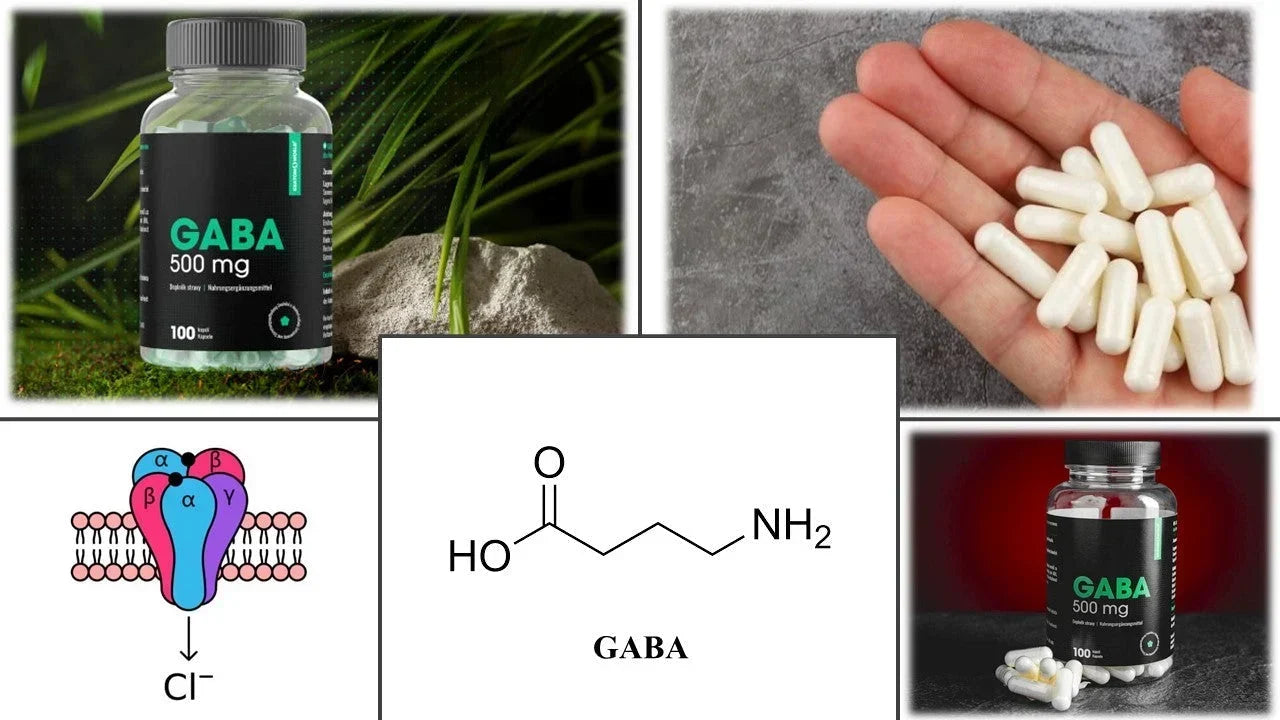
γ-Aminobutyric acid (GABA) is a small, non-proteinogenic amino acid, chemically identified as 4-aminobutanoic acid (Fig. 1). In mammals, it plays an essential role as the main inhibitory neurotransmitter in the central nervous system, suppressing excessive neuronal activity and helping maintain the balance between excitatory signalling, particularly glutamatergic signalling, and inhibitory GABAergic signalling (Foster and Kemp, 2006; Heli et al., 2022; Hepsomali et al., 2020). This balance is crucial for the stability of neuronal networks, the regulation of anxiety, sleep dynamics, and stress reactivity, as well as the modulation of seizure susceptibility and the “fine-tuning” of neuronal communication across a wide range of brain circuits (Kalueff and Nutt, 2007; Nuss, 2015; Perucca et al., 2023). From a practical perspective, GABA has a dual significance. On the one hand, it is an endogenous molecule that the body naturally produces and tightly regulates; on the other, in recent decades it has become a popular ingredient in functional foods and dietary supplements, where it is associated with effects such as relaxation, stress reduction, sleep support, and sometimes a modest influence on blood pressure (Heli et al., 2022; Hepsomali et al., 2020; Inoue et al., 2003). These expectations have a biological rationale, as the GABAergic system is indeed central to the anxiolytic and hypnotic effects of many medicines. However, when supplementing with GABA itself, it is important to distinguish between the physiological role of endogenous GABA and the efficacy of the orally administered substance at commonly used doses and in typical formulations (Goldschen-Ohm, 2022; Hou et al., 2024). In a broader context, it is also worth mentioning that the market for GABA-enriched foods has been developing for a long time, particularly in East Asia, and consumers often perceive GABA as a “neuro-nutritional” ingredient for stress and sleep (Diana et al., 2014; Heli et al., 2022).
From a chemical perspective, GABA is a simple molecule with the empirical formula C4H9NO2 and a molar mass of approximately 103.12 g/mol. Its polarity and charge states vary with the pH of its environment, which is important for understanding transport across biological membranes and may contribute to its limited passage across certain physiological barriers, particularly the blood–brain barrier (Hepsomali et al., 2020; Hou et al., 2024; Zhang and Liu, 1998). GABA occurs in a variety of foods, although its content varies and is often influenced by processing, germination, and fermentation. Popular nutrition literature frequently mentions sources such as tea, tomatoes, soy, germinated rice, and various fermented products; fermentation involving lactobacilli can increase the GABA concentration in the food matrix (Diana et al., 2014; Hou et al., 2024; Icer et al., 2024; Iorizzo et al., 2024). This is also methodologically important because some clinical studies use “natural” GABA obtained from fermented sources, such as fermented rice germ, whereas others use biosynthetic GABA in capsules or tablets. In practice, we therefore encounter both the pure isolated substance and complex matrices in which GABA may act in combination with other components, making it more difficult to attribute an effect exclusively to GABA itself (Byun et al., 2018; Hepsomali et al., 2020). Endogenous GABA synthesis in nervous tissue occurs primarily through the decarboxylation of glutamate by the enzyme glutamate decarboxylase (GAD), which uses pyridoxal phosphate, the active form of vitamin B6, as a cofactor (Jiang et al., 2025; Marilovtseva et al., 2025). This biochemical detail has practical significance in understanding that GABA is not a “foreign” substance but part of the neurotransmitter balance that the body actively maintains. Following synthesis, GABA is transported into synaptic vesicles, released into the synaptic cleft, binds to postsynaptic receptors, and is subsequently taken up by transporters and broken down through pathways linked to cellular and mitochondrial metabolism (Jin et al., 2003; Roth and Draguhn, 2012).

Figure 1. Gamma-aminobutyric acid (GABA).
GABA acts primarily through GABA receptors. GABA-A receptors are ionotropic, ligand-gated ion channels, typically associated with the flow of chloride ions (Luo and Balle, 2022), whereas GABA-B receptors are metabotropic, meaning that they are coupled to G proteins and influence cellular excitability indirectly (Gaiarsa and Porcher, 2013). Some classifications also include GABA-C; in modern terminology, this is generally discussed in the context of ionotropic receptors, historically particularly those containing ρ subunits (Bormann, 2000). Activation of GABA receptors results in an overall reduction in neuronal excitability and an increase in inhibitory tone, which is physiologically important for regulating anxiety and stress, sleep architecture, and the stability of neuronal circuits (Bormann, 2000; Hepsomali et al., 2020; Luo and Balle, 2022). From the perspective of dietary supplements, however, the key question is whether and how orally ingested GABA can influence the central nervous system. The prevailing view has long been that GABA crosses the blood–brain barrier (BBB) only to a limited extent. Historically, the literature has been inconsistent, and robust direct evidence in humans is lacking, such as a consistent increase in brain GABA after oral administration measured using methods such as magnetic resonance spectroscopy (MR spectroscopy). A systematic review focusing on stress and sleep explicitly notes that convincing direct evidence of BBB permeability to GABA in humans is unavailable (Boonstra et al., 2015; Hepsomali et al., 2020). This has major implications for interpreting the efficacy of supplementation: although the biological rationale for involvement of the GABAergic system is strong, the effects of oral GABA may not primarily involve directly “delivering GABA to the brain”. Consequently, indirect effects through peripheral tissues and the gut–brain axis have frequently been discussed in recent years. This hypothesis proposes that oral GABA may act outside the central nervous system (CNS), for example in the enteric nervous system, and influence stress- and sleep-related outcomes through autonomic regulation and vagal pathways (Boonstra et al., 2015; Jiang et al., 2025; Liwinski et al., 2023). This framework is biologically plausible and is also consistent with the broader interpretation of certain “psychobiotic” effects. However, clinical confirmation of the complete causal chain linking dose, peripheral signalling, central changes, and a clinically meaningful effect remains limited and is often complicated by methodological diversity across studies (Boonstra et al., 2015; Hepsomali et al., 2020; Liwinski et al., 2023). Pharmacokinetic data nevertheless provide important guidance for realistic expectations of the effect. In a study examining pharmacokinetics and pharmacodynamics, GABA was rapidly absorbed after oral administration, with peak plasma concentrations reached within approximately 0.5–1.5 hours and an elimination half-life of several hours, approximately five. No significant accumulation was observed during repeated high-dose administration of 2 g three times daily for seven days (Li et al., 2015). This supports an effect occurring within an early window after ingestion rather than the idea of stable, “all-day” central sedation (Hepsomali et al., 2020). The same study also described systemic and endocrine changes, such as increased circulating insulin and, under some dosing regimens, glucagon, without substantial changes in blood glucose in healthy individuals. This points to a complex regulatory response rather than a simple metabolic effect in one direction (Li et al., 2015).
In the areas of stress and subjective relaxation, studies often rely on indirect measures, such as heart rate variability, changes in electroencephalographic recordings (EEG), or short-term psychometric scales. Review literature reports that doses used to assess stress markers range from a few milligrams in beverages or foods to approximately 100 mg of biosynthetic GABA, although methodological diversity currently prevents a robust meta-analytical synthesis (Abdou et al., 2006; Hepsomali et al., 2020). This also includes studies that attract media attention but have methodological limitations, such as a small randomised crossover study in esports players using a 200 mg dose. Changes were recorded in certain subjective domains and selected performance measures, but the small number of participants and industry funding weaken the conclusions (Hara et al., 2025). For sleep, the most consistent clinical signal concerns sleep latency, meaning the time taken to fall asleep. A systematic review mentions studies in people with poor sleep quality in which 100 mg of biosynthetic GABA for one week shortened sleep latency and increased non-REM sleep, but without a convincing effect across a broader range of measures, such as night-time awakenings or REM sleep (Hepsomali et al., 2020; Yamatsu et al., 2016). The most clinically grounded evidence for insomnia comes from randomised, double-blind, placebo-controlled studies using polysomnography and natural GABA derived from fermented rice germ. A study using 300 mg daily for four weeks reported reduced sleep latency and improvements in some subjective scores. However, methodological limitations should also be noted, particularly the randomisation ratio resulting in a small placebo group and differences in baseline measures (Byun et al., 2018). A subsequent study using a low dose of 75 mg daily for four weeks also reported reduced sleep latency and some changes in sleep architecture, such as an increase in stage N3, or deep sleep, and a reduction in the arousal index. However, the interpretation of these results depends on the statistical model used and on whether the effect is demonstrable relative to placebo or represents only a change within the intervention group itself (Yoon et al., 2022). Blood pressure and autonomic regulation also appear in the clinical literature. In people with mildly elevated blood pressure, some studies of GABA-enriched fermented products have reported reductions during interventions lasting several weeks, including interpretations suggesting that the effect persisted within an approximately twelve-week regimen (Diana et al., 2014; Inoue et al., 2003). Safety reviews also point out that GABA may be associated with a transient and generally mild reduction in blood pressure. Although relatively small, this may be clinically relevant, particularly in people taking antihypertensive medicines, in whom combined use could theoretically increase the risk of hypotension (Oketch-Rabah et al., 2021). Supplement marketing sometimes links GABA to growth hormone. In this case, it is important to rely on clinical data and distinguish pharmacological doses from ordinary supplementation. Older endocrinological literature shows that an acute oral dose of 5 g of GABA can increase plasma growth hormone levels, whereas repeated, very high dosing of around 18 g daily for several days can alter hormonal responses in challenge tests, including differing growth hormone and prolactin responses (Cavagnini et al., 1980). These findings are important for understanding GABA’s biological potential, but they cannot be directly extrapolated to ordinary dietary supplements containing tens to hundreds of milligrams. More recent fitness-focused studies include smaller interventions, such as a combination of whey protein and 100 mg of GABA daily during resistance training, in which changes in certain body composition and hormonal parameters were described. However, interpretation of these findings is limited by small sample sizes, the combined intervention, and the unclear clinical significance of changes in resting growth hormone levels (Sakashita et al., 2019). From a safety perspective, the evidence to date is relatively favourable. A comprehensive safety review prepared in the context of the United States Pharmacopeia states that no serious adverse effects were observed across clinical studies, even in some short-term regimens of up to 18 g daily for four days, and that the safety profile remains favourable in longer studies using lower doses (Byun et al., 2018; Oketch-Rabah et al., 2021). At the same time, it is repeatedly emphasised that reductions in blood pressure may be clinically relevant during concurrent antihypertensive treatment. A pharmacokinetic and pharmacodynamic study using a high single dose of 2 g and repeated doses of 2 g three times daily for seven days provided a more detailed picture of tolerability. The most commonly reported complaints included a burning sensation in the throat, burning sensations in the skin, headaches, and dizziness, with adverse events occurring more frequently during repeated high-dose administration than after a single dose (Li et al., 2015). In sleep studies using doses of 75–300 mg daily, tolerability was generally good. At 300 mg, complaints were mostly mild to moderate, such as abdominal discomfort, headache, or drowsiness, whereas no adverse effects were reported at 75 mg (Byun et al., 2018; Yoon et al., 2022).
In practice, GABA should be viewed as one of several options for stress management and sleep support. For chronic insomnia, behavioural and psychological interventions, particularly cognitive behavioural therapy for insomnia, have the most convincing evidence base (Edinger et al., 2021; Riemann et al., 2023). Among other dietary supplements, melatonin has relatively solid support: meta-analyses of randomised trials generally describe a statistically significant, although modest, reduction in sleep latency and improvements in certain selected sleep measures (Ferracioli-Oda et al., 2013). In some populations, such as older people with poor sleep quality, placebo-controlled data are also available for magnesium, showing changes in subjectively assessed insomnia measures and certain laboratory markers related to stress (Mah and Pitre, 2021). Reviews and meta-analyses focusing on sleep are available for L-theanine, a non-proteinogenic amino acid naturally present in tea, but their conclusions tend to be cautious and depend largely on methodological diversity across studies, the doses used, and the choice of outcome measures (Cotter et al., 2026; Esquivel and Ghosn, 2024).
Written for Kratom World by:
Ing. Matěj Malík, Ph.D.
Research Scientist, Postdoctoral Researcher
Faculty of Agrobiology, Food and Natural Resources, Czech University of Life Sciences Prague
Department of Agroenvironmental Chemistry and Plant Nutrition

References