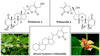
Characteristics and Traditional Use
Ashwagandha (Withania somnifera (L.) Dunal) is a perennial herb of the nightshade family (Solanaceae), also known as Indian ginseng or winter cherry (Gaurav et al., 2023). In Ayurveda, the traditional Indian system of medicine, it has been used for more than 3,000 years as a “rasayana”, a rejuvenating remedy that supports vitality, longevity and mental well-being. The name “ashwagandha” means “smell of a horse” in Sanskrit, referring both to its characteristic aroma and its purported ability to impart strength and endurance (Balkrishna et al., 2024). Originally native to North Africa, India and the Middle East, it is now also extensively cultivated in southern Asia and Central America. It grows mainly in dry conditions, on rocky soils, along roadsides or in shrubby savannas (Malík and Tlustoš, 2023). Botanically, it is a branched shrub reaching a height of 50 to 100 cm, occasionally up to 2.5 m. It has small, bell-shaped, yellowish-green flowers and red berry-like fruits enclosed in a calyx. The root is the most commonly used part, but the leaves also have therapeutic effects (González-Stuart et al., 2014).
Chemical Composition and Mechanism of Action
Ashwagandha contains a wide range of bioactive substances, including alkaloids (isopelletierine, anaferine, anahygrine and withasomnine), saponins, flavonoids, tannins and steroidal lactones known as withanolides, such as withaferin A (Shinde et al., 2023). Withanolides (Fig. 1), which are structurally similar to the ginsenosides found in ginseng, are considered the main pharmacologically active constituents responsible for the herb’s adaptogenic, neuroprotective and anti-inflammatory effects (Abdelwahed et al., 2023; White et al., 2016). Ashwagandha influences the levels of neurotransmitters such as gamma-aminobutyric acid (GABA), serotonin and dopamine, thereby supporting cognitive function, reducing anxiety and improving sleep quality. Its modulation of cortisol levels also plays an important role, contributing to a reduction in the body’s stress response. The neuroprotective effects of ashwagandha are associated with reduced oxidative stress, improved mitochondrial function and increased activity of antioxidant enzymes such as superoxide dismutase (SOD) and catalase (Majeed et al., 2023; Muralidhara, 2023). Research in animal models has shown that it can reduce the production of reactive oxygen radicals and lipid peroxidation in the brain, thereby protecting neurons against degenerative processes. Another important mechanism is its effect on the cholinergic system: inhibition of the enzyme acetylcholinesterase and reduced amyloid-β aggregation, suggesting a potential role for ashwagandha in the prevention of neurodegenerative diseases, including Alzheimer’s disease (Dar and Ahmad, 2020).

Figure 1.Ashwagandha – the main bioactive compounds belonging to the withanolide group.
Effects on Cognitive and Physical Performance
Randomised controlled trials show that supplementation with ashwagandha extract for 8–12 weeks improves working memory, reaction time and overall cognitive flexibility (Choudhary et al., 2017). Research in healthy individuals and people experiencing chronic stress has confirmed that taking 225–600 mg of extract daily significantly reduces cortisol levels, improves sleep quality and enhances overall mental well-being (Leonard et al., 2024; Xing et al., 2022). In addition to its effects on the nervous system, ashwagandha has been shown to support blood cell production: it increases red and white blood cell counts, haemoglobin levels and platelet counts, leading to better tissue oxygenation and increased aerobic capacity (Jówko et al., 2025). Ashwagandha has therefore also proved useful as a means of improving physical performance. Studies in athletes have shown that regular use leads to increases in muscle strength and endurance and improved recovery after physical exertion (Coope et al., 2025). The mechanism of action probably involves the modulation of stress hormones and improved oxygen supply to the muscles (Bonilla et al., 2021).
Dosage and Safety of Use
The recommended daily dosage ranges from 6–10 g of dried root or 750–1250 mg of a standardised extract containing at least 5% withanolides (Sharma et al., 2025; Tandon and Yadav, 2020). It is recommended to start with a lower dose and gradually increase it to minimise the risk of adverse effects such as gastrointestinal discomfort, nausea or drowsiness. The most suitable time to take it is in the evening, as higher doses may have sedative effects (Cheah et al., 2021; Tandon and Yadav, 2020). Ashwagandha is generally considered safe, but its use may affect thyroid hormone levels. Studies suggest that it can increase levels of triiodothyronine (T3) and thyroxine (T4), which could be problematic for people with hyperthyroidism (Wiciński et al., 2023). Pregnant and breastfeeding women should preferably avoid supplementation, as its effects on the foetus have not been sufficiently studied (Malík and Tlustoš, 2023). Ashwagandha may also interact with certain medicines, including those for diabetes and high blood pressure, sedatives and immunosuppressants. It is therefore important to consult a doctor before starting supplementation, particularly if you take other medicines or have health problems (Rasheed et al., 2024). However, the most convenient way to administer it is with an Ashwagandha spray.
Possible Alternatives and Related Products
Possible alternatives or complementary products include various substances and herbs, such as golden root (Rhodiola rosea), an adaptogen known for its ability to increase stress resistance, improve mental performance and reduce fatigue (Wal et al., 2019). Asian ginseng (Panax ginseng) is traditionally used to enhance vitality, mental performance and physical endurance (de Oliveira Zanuso et al., 2022). Another option is bacopa (Bacopa monnieri), an herb used in Ayurveda to support memory, learning and concentration (Dubey and Chinnathambi, 2019; Gokhale et al., 2025). Ginkgo (Ginkgo biloba) is valued for its positive effects on blood circulation in the brain (Noor-E-Tabassum et al., 2022). Another possibility is curcumin, an active constituent with anti-inflammatory and antioxidant properties and a natural orange pigment obtained from the rhizomes of plants of the genus Curcuma, particularly turmeric (Curcuma longa, synonym Curcuma domestica) and zedoary (Curcuma zedoaria) (Ayati et al., 2019).
Written for Kratom World by:
Ing. Matěj Malík, Ph.D.
Research Scientist, Postdoctoral Researcher
Faculty of Agrobiology, Food and Natural Resources, Czech University of Life Sciences Prague (ČZU)
Department of Agroenvironmental Chemistry and Plant Nutrition
Thank you for reading,
Your Kratom World
This article does not serve as instructions for use or a recommendation for consumption. The information provided is solely for educational and informational purposes. The products mentioned in this article are intended exclusively for collection and study purposes.
References
- Abdelwahed, M.T., Hegazy, M.A., Mohamed, E.H., 2023. Major biochemical constituents of Withania somnifera (ashwagandha) extract: A review of chemical analysis. Reviews in Analytical Chemistry. 42, 20220055. https://doi.org/10.1515/revac-2022-0055.
- Ayati, Z., Ramezani, M., Amiri, M.S., Moghadam, A.T., Rahimi, H., Abdollahzade, A., Sahebkar, A., Emami, S.A., 2019. Ethnobotany, Phytochemistry and Traditional Uses of Curcuma spp. and Pharmacological Profile of Two Important Species (C. longa and C. zedoaria): A Review. Current Pharmaceutical Design. 25, 871-935. https://doi.org/10.2174/1381612825666190402163940.
- Balkrishna, A., Kumud, Chaurasia, S.K., Goswami, P., Arya, V., 2024. An in-depth exploration of ethnomedicinal applications, phytochemical profiles and pharmacological potentials: unveiling Withania somnifera. Trends in Current Biology. 2, 10-17. https://doi.org/10.14719/tcb.4431.
- Bonilla, D.A., Moreno, Y., Gho, C., Petro, J.L., Odriozola-Martínez, A., Kreider, R.B., 2021. Effects of Ashwagandha (Withania somnifera) on Physical Performance: Systematic Review and Bayesian Meta-Analysis. Journal of Functional Morphology and Kinesiology. 6, 20. https://doi.org/10.3390/jfmk6010020.
- Coope, O.C., Reales Salguero, A., Spurr, T., Páez Calvente, A., Domenech Farre, A., Jordán Fisas, E., Lloyd, B., Gooderick, J., Abad Sangrà, M., Roman-Viñas, B., 2025. Effects of Root Extract of Ashwagandha (Withania somnifera) on Perception of Recovery and Muscle Strength in Female Athletes. European Journal of Sport Science. 25, e12265. https://doi.org/10.1002/ejsc.12265.
- Dar, N.J., Ahmad, M., 2020. Neurodegenerative diseases and Withania somnifera (L.): An update. Journal of Ethnopharmacology. 256, 112769. https://doi.org/10.1016/j.jep.2020.112769.
- de Oliveira Zanuso, B., de Oliveira dos Santos, A.R., Miola, V.F.B., Guissoni Campos, L.M., Spilla, C.S.G., Barbalho, S.M., 2022. Panax ginseng and aging related disorders: A systematic review. Experimental Gerontology. 161, 111731. https://doi.org/10.1016/j.exger.2022.111731.
- Dubey, T., Chinnathambi, S., 2019. Brahmi (Bacopa monnieri): An ayurvedic herb against the Alzheimer's disease. Archives of Biochemistry and Biophysics. 676, 108153. https://doi.org/10.1016/j.abb.2019.108153.
- Gaurav, H., Yadav, D., Maurya, A., Yadav, H., Yadav, R., Shukla, A.C., Sharma, M., Gupta, V.K., Palazon, J., 2023. Biodiversity, Biochemical Profiling, and Pharmaco-Commercial Applications of Withania somnifera: A Review. Molecules. 28, 1208. https://doi.org/10.3390/molecules28031208.
- Gokhale, M.V., Kuchewar, V., Yadav, P., Tarare, B., 2025. Evaluation of Comparative Efficacy of Ashwagandha (Withania somnifera) vs Brahmi (Bacopa monnieri Linn) on Stress Level and Quality of Sleep in the Subjects Experiencing Mental Stress: A Clinical Trial Protocol. Journal of Clinical & Diagnostic Research. 19, 5-7. https://doi.org/10.7860/JCDR/2025/72613.20495.
- González-Stuart, A., Dhan Prakash, D.P., Charu Gupta, C.G., 2014. Phytochemistry of plants used in traditional medicine, In: Prakash, D., Sharma, G. (Eds.), Phytochemicals of nutraceutical importance. CABI, Boston, MA, USA, pp. 288–309. https://doi.org/10.1079/9781780643632.0288.
- Cheah, K.L., Norhayati, M.N., Husniati Yaacob, L., Abdul Rahman, R., 2021. Effect of Ashwagandha (Withania somnifera) extract on sleep: A systematic review and meta-analysis. PLOS ONE. 16, e0257843. https://doi.org/10.1371/journal.pone.0257843.
- Choudhary, D., Sauvik, B., and Bose, S., 2017. Efficacy and Safety of Ashwagandha (Withania somnifera (L.) Dunal) Root Extract in Improving Memory and Cognitive Functions. Journal of Dietary Supplements. 14, 599-612. https://doi.org/10.1080/19390211.2017.1284970.
- Jówko, E., Klusiewicz, A., Rębiś, K., Długołęcka, B., Charmas, M., Cieśliński, I., 2025. Effects of an 8-week high intensity interval training (HIIT) and ashwagandha supplementation on aerobic capacity, muscle oxygenation and haematological parameters in healthy men. Biology of Sport. 42, 129-139. https://doi.org/10.5114/biolsport.2025.147453.
- Leonard, M., Dickerson, B., Estes, L., Gonzalez, D.E., Jenkins, V., Johnson, S., Xing, D., Yoo, C., Ko, J., Purpura, M., Jäger, R., Faries, M., Kephart, W., Sowinski, R., Rasmussen, C.J., Kreider, R.B., 2024. Acute and Repeated Ashwagandha Supplementation Improves Markers of Cognitive Function and Mood. Nutrients. 16, 1813. https://doi.org/10.3390/nu16121813.
- Majeed, M., Nagabhushanam, K., Mundkur, L., 2023. A standardized Ashwagandha root extract alleviates stress, anxiety, and improves quality of life in healthy adults by modulating stress hormones: Results from a randomized, double-blind, placebo-controlled study. Medicine. 102, e35521. https://doi.org/10.1097/md.0000000000035521.
- Malík, M., Tlustoš, P., 2023. Nootropic Herbs, Shrubs, and Trees as Potential Cognitive Enhancers. Plants. 12, 1364. https://doi.org/10.3390/plants12061364.
- Muralidhara, M., 2023. Chapter Six - Exploring the neuro-ameliorative propensity of Withania somnifera—Indian ginseng, In: Muralidhara, M., Rajini, P.S. (Eds.), Ayurvedic Herbal Preparations in Neurological Disorders. Academic Press, pp. 165-189. https://doi.org/10.1016/B978-0-443-19084-1.00012-0.
- Noor-E-Tabassum, Das, R., Lami, M.S., Chakraborty, A.J., Mitra, S., Tallei, T.E., Idroes, R., Mohamed, A.A.-R., Hossain, M.J., Dhama, K., Mostafa-Hedeab, G., Emran, T.B., 2022. Ginkgo biloba: A Treasure of Functional Phytochemicals with Multimedicinal Applications. Evidence-Based Complementary and Alternative Medicine. 2022, 8288818. https://doi.org/10.1155/2022/8288818.
- Rasheed, H., Ahmed, S., Sharma, A., 2024. Changing Trends Towards Herbal Supplements: An Insight into Safety and Herb-drug Interaction. Current Pharmaceutical Biotechnology. 25, 285-300. https://doi.org/10.2174/1389201024666230718114606.
- Sharma, E., Ganu, G., Kshirsagar, K., Shah, A., Mahale, U., Mehta, A., Nair, S., 2025. An open-label, single dose, safety and pharmacokinetic study of Withania somnifera root extract in healthy volunteers. Drug Metabolism and Personalized Therapy. https://doi.org/10.1515/dmpt-2024-0089.
- Shinde, S., Balasubramaniam, A.K., Mulay, V., Saste, G., Girme, A., Hingorani, L., 2023. Recent Advancements in Extraction Techniques of Ashwagandha (Withania somnifera) with Insights on Phytochemicals, Structural Significance, Pharmacology, and Current Trends in Food Applications. ACS Omega. 8, 40982-41003. https://doi.org/10.1021/acsomega.3c03491.
- Tandon, N., Yadav, S.S., 2020. Safety and clinical effectiveness of Withania Somnifera (Linn.) Dunal root in human ailments. Journal of Ethnopharmacology. 255, 112768. https://doi.org/10.1016/j.jep.2020.112768.
- Wal, A., Wal, P., Rai, A.K., Tiwari, R., Prajapati, S.K., 2019. Chapter 34 - Adaptogens With a Special Emphasis on Withania somnifera and Rhodiola rosea, In: Bagchi, D., Nair, S., Sen, C.K. (Eds.), Nutrition and Enhanced Sports Performance (Second Edition). Academic Press, pp. 407-418. https://doi.org/10.1016/B978-0-12-813922-6.00034-5.
- White, P.T., Subramanian, C., Motiwala, H.F., Cohen, M.S., 2016. Natural Withanolides in the Treatment of Chronic Diseases, In: Gupta, S.C., Prasad, S., Aggarwal, B.B. (Eds.), Anti-inflammatory Nutraceuticals and Chronic Diseases. Springer International Publishing, Cham, pp. 329-373. https://doi.org/10.1007/978-3-319-41334-1_14.
- Wiciński, M., Fajkiel-Madajczyk, A., Kurant, Z., Kurant, D., Gryczka, K., Falkowski, M., Wiśniewska, M., Słupski, M., Ohla, J., Zabrzyński, J., 2023. Can Ashwagandha Benefit the Endocrine System?—A Review. International Journal of Molecular Sciences. 24. https://doi.org/10.3390/ijms242216513.
- Xing, D., Yoo, C., Gonzalez, D., Jenkins, V., Nottingham, K., Dickerson, B., Leonard, M., Ko, J., Faries, M., Kephart, W., Purpura, M., Jäger, R., Sowinski, R., Rasmussen, C.J., Kreider, R.B., 2022. Effects of Acute Ashwagandha Ingestion on Cognitive Function. International Journal of Environmental Research and Public Health. 19, 11852. https://doi.org/10.3390/ijerph191911852.


